2025 year in review – realizing true commercial Quantum Advantage in the International Year of Quantum


The UNESCO International Year of Quantum Science and Technology in 2025 presented an opportunity to raise awareness of quantum science and technology for the general public, private sector, and government.
Q-CTRL turned it into so much more.
2025 was a year of exceptional progress, commercial wins, and growth. But more than anything, it was the year we transformed the promise of quantum technology into something useful with actual commercial value.
On World Quantum Day, we announced that we had achieved the first true commercial quantum advantage in GPS-denied navigation. We used quantum sensors to help navigate when GPS was unavailable, outperforming the best conventional alternative by 50X (soon after increasing to >100X). This achievement earned acclaim as one of TIME Magazine’s Best Innovations of 2025, but more on that later.
Q-CTRL pushed the quantum sector over the threshold of advantage in sensing and set the community up for the same in quantum computing over the coming years.
And our technological leadership was reflected commercially, with over $50M in sales and contract wins this year! Almost no one else in the sector comes anywhere close.
Let’s review this remarkable year of progress.

Software makes quantum hardware take flight
Our fundamental view has always been the same: that infrastructure software is the key to unlocking useful performance from any quantum technology. Whether it’s addressing errors in quantum computers with performance-management software, leveraging new AI automation for hardware calibration and characterization, or making quantum sensors operational in the field, it’s always software at the heart.
We’re not a professional services firm or an algorithm research team. We build the critical software technology to make quantum useful. And 2025 was all about proving this out in the real world with our customers.
Accelerating quantum advantage in quantum computing applications

Just like in quantum sensing, we’ve been pushing ahead to useful quantum advantage in quantum computing by enabling new applications with the most powerful infrastructure software in the sector. We build software that automates and virtualizes quantum computers to make them more powerful and useful for the broadest range of users, from R&D teams to industry end users. We ship enterprise-grade products that lift everyone using and deploying quantum computers.
A key part of our mission has been supporting partners to achieve their business objectives by leveraging the most advanced performance-management software when they execute their algorithms. We’ve seen huge wins across a range of problems from logistics and scheduling with Airbus and Network Rail to quantum machine learning for automotive design with Mazda, and a new finance partnership with finQBit.
Quantum chemistry has also been an exciting area of development, as we’ve empowered our partners to achieve record-setting chemical calculations with Mitsubishi Chemical and world-first simulations of chemical dynamics with the University of Sydney. We were also proud to continue our product innovation in this application, releasing a major new capability in Fire Opal to make it even easier to execute quantum chemistry problems.
In every case, we’ve focused on how our world-leading software products can be the key to helping users realize their quantum ambitions. Not one-off algorithm development or hand-designed circuits – deployable software that works every time across all applications.
Delivering strategic and economic value in the real world
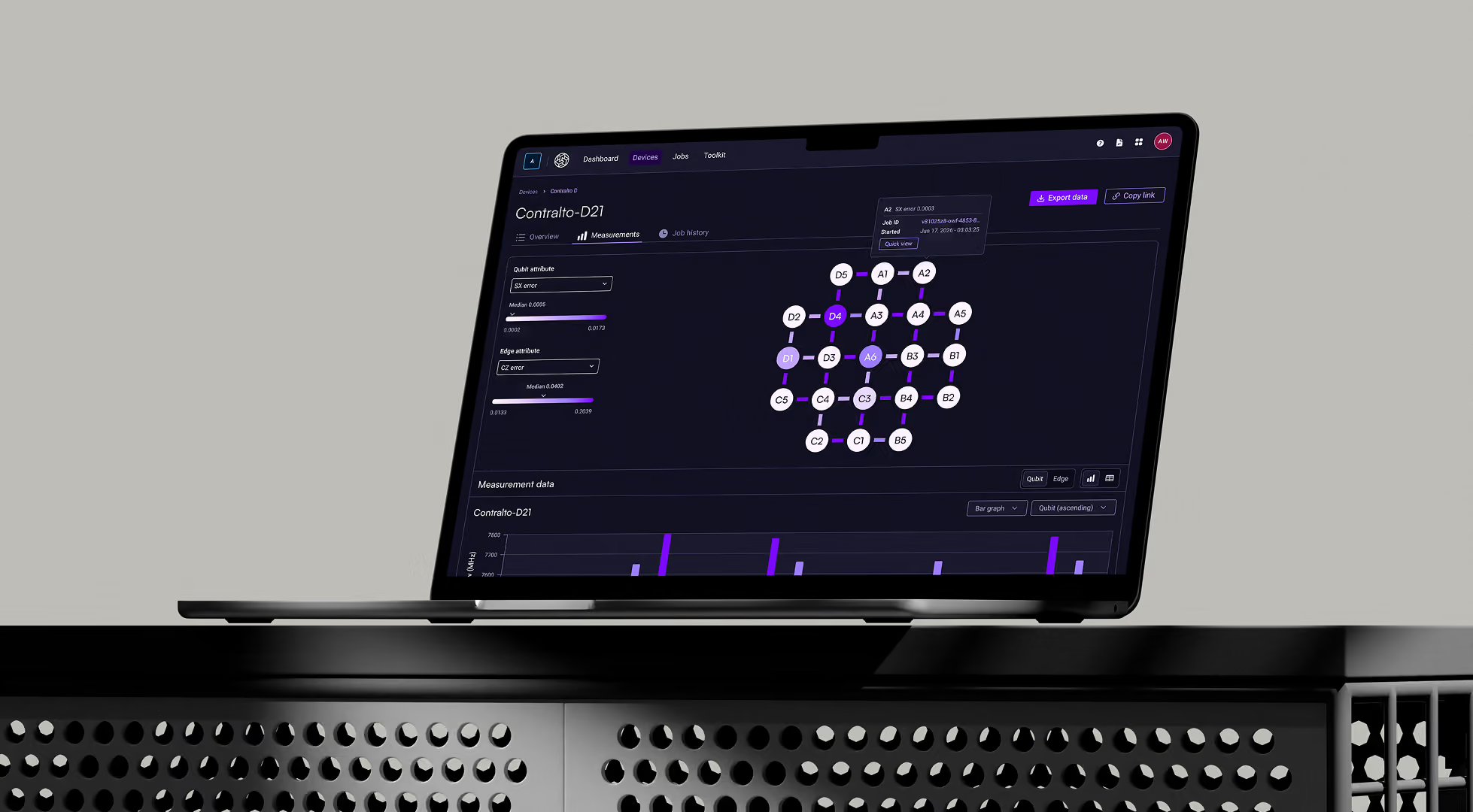
Q-CTRL was the first independent software vendor to integrate with a major cloud vendor when Fire Opal went live in 2023 with IBM Quantum and later the Qiskit Functions catalog for Premium users in 2024.
2025 followed suit, seeing a dramatic expansion of our software integrations across cloud quantum platforms. We were thrilled to continue growing our footprint with IBM systems, as showcased at the IBM Quantum Developer event, IBM TechXChange, and IBM APAC Summit Singapore, where we were excited to demonstrate how third-party software providers are now building new Qiskit Functions on top of our incredible performance-management error-suppression circuit function, already available natively in the Qiskit Functions catalog. Building functions on functions is only achievable by leveraging our zero-overhead, deterministic error-suppression technology.
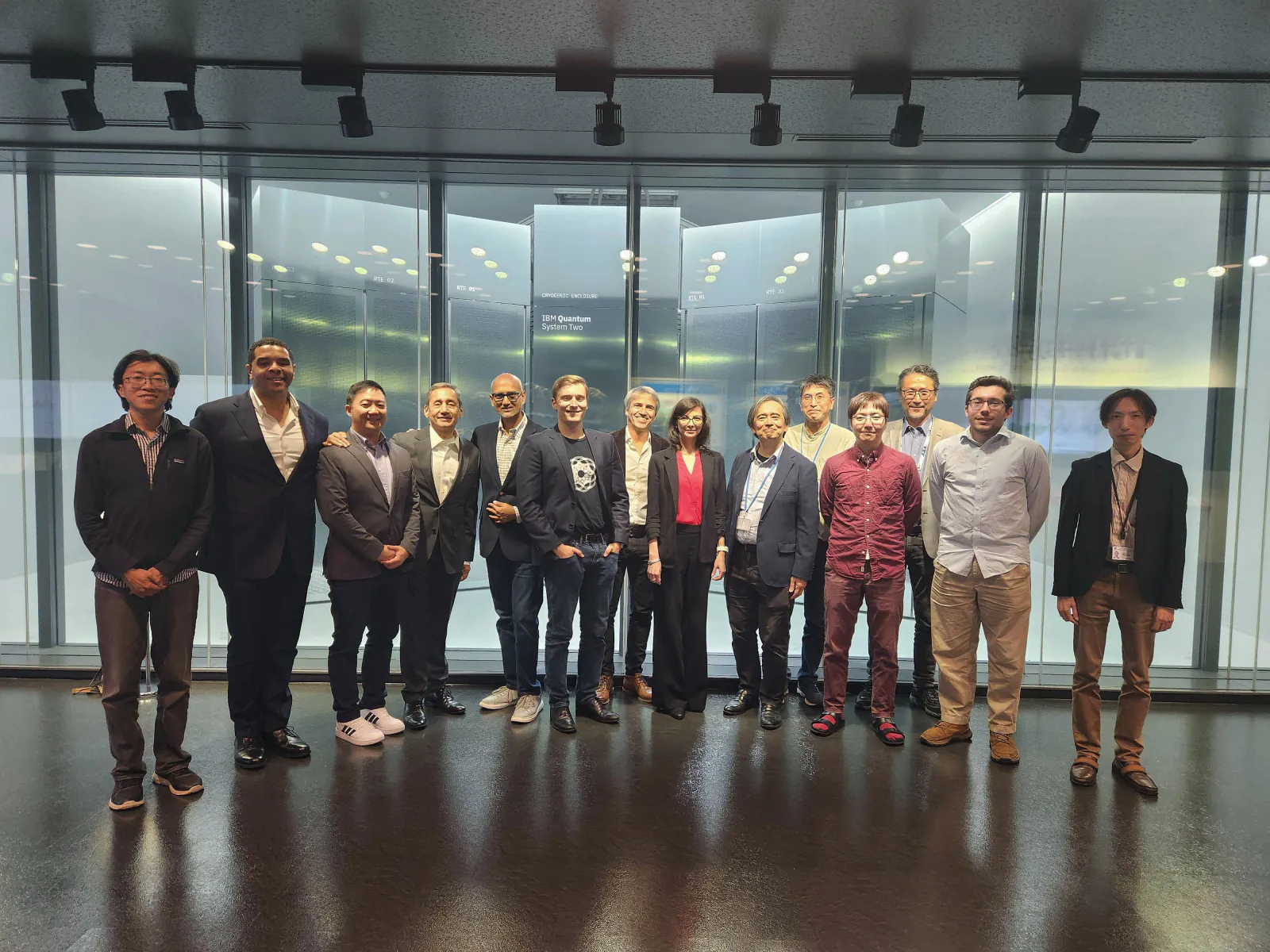
We also saw our first on-premises integration into an HPC center with Fire Opal integrated with RIKEN’s IBM Quantum System Two and the Fugaku supercomputer. This represents our second integration in a Japanese IBM system, as we already support the Keio Quantum Computing Center. Users at RIKEN have already been seeing incredible results that we look forward to sharing next year.
In addition to these exciting deployments, we were proud to integrate Fire Opal with AWS to support IonQ processors, bringing our performance-management technology to trapped-ion machines. Next, we went live with Rigetti Ankaa-3 systems via their Quantum Cloud Service, ensuring that we are natively integrated with the broadest range of hardware systems globally.
Enabling quantum computing integration in HPC and data centers
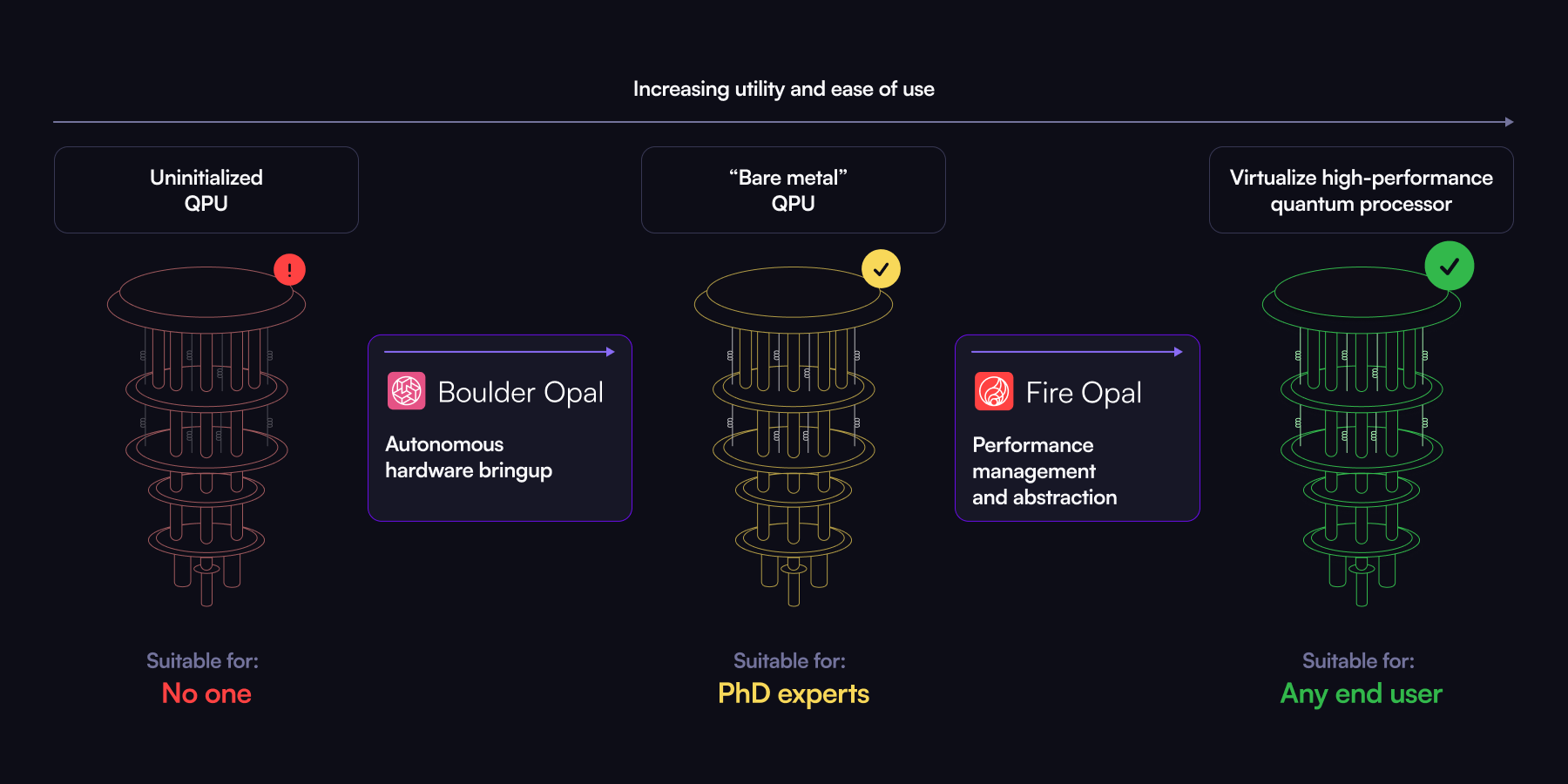
A major trend in the sector is the move to integrate quantum computing into data centers. We’re focused on addressing the real problems limiting deployability so we can move past early one-off demo installations. That means ensuring the systems can be operated autonomously, used by anyone, and scaled to broad deployment without cost blowouts.
Our infrastructure software is key to delivering autonomy and virtualization for data center installations. We brought Boulder Opal’s intelligent autonomy capabilities for quantum computer calibration to market this year (not scripted automation, but true autonomy), and announced a major UK-backed partnership with TreQ and QuantWare to deliver this technology into the Open Architecture Quantum (OAQ) Testbed at the TreQ Manufacturing Facility in Milton Park, Oxfordshire.
We then took a massive step further, introducing the Quantum Utility Block reference architecture for cost-efficient deployment and integration of quantum computers at scale in partnership with QuantWare and Qblox. This approach delivers push-button quantum computers into any data center via interoperable hardware and software components at 10X reduced cost, and without requiring PhD-level teams for integration and maintenance. The first QUB system is going online at Elevate Quantum in 2026 and will be the first commercially reproducible modular quantum computing platform!
These integrations serve as clear examples of how our infrastructure software is enabling hybrid classical-quantum computing, something we were proud to see Jensen Huang of NVIDIA showcase this year on the back of our partnership!

To enable data center operators to adopt quantum computing, we have published these how-to guides for the sector to help them get started:
- Three steps to integrate quantum computing into your data center or HPC facility
- Software abstraction: The missing link to commercially viable quantum computing
- How data centers can learn from GPU adoption to get ahead in the quantum race
Unlocking near-term value with AI-powered error reduction techniques

At the heart of our solutions is a globally unique technology for reducing errors in quantum computers and driving up performance and efficiency. First, we wanted to provide real insight to algorithm developers about how to push the limits of quantum hardware, with application-specific insights into choosing the best error reduction strategies. The TLDR is that anyone running algorithms can get direct advice on how best to reduce errors for their application!
Our software is designed to deliver real value to end users right now. This requires innovating across the current bottlenecks in running workloads on today’s machines and planning for what comes next. In this effort, we presented detailed comparative benchmarking between the Fire Opal compiler and all contemporary alternatives. The results showed that Fire Opal delivered orders of magnitude better efficiency, speed, and stability for applications at utility scale.
Being the fastest today isn’t enough. We worked directly with NVIDIA to develop new solutions for critical parts of the compilation stage, leveraging new AI approaches that could exploit GPUs and deliver massive wins long term. Our initial results showed a humble 300,000X acceleration of a critical compiler step: layout selection. We then worked with NVIDIA to develop an entirely new framework for this problem that actually delivers GPU acceleration to the broader (classical) subgraph isomorphism problem for the first time! We covered this work and our development of new AI-enhanced circuit design for photonic circuits at the NVIDIA AI Day in Sydney. Watch this space for more!
This year, we also showcased major advances in the application of our technology to the development of quantum error correction (QEC). This is a hot topic with many beautiful scientific demonstrations this year. We were excited to set world records for the largest verifiable entangled state at 75 qubits and the longest-range gate teleportation by combining Fire Opal with error detection, published in PRX Quantum. Boulder Opal also enabled extraordinary new demonstrations of a universal gate set in bosonic QEC codes, published in Nature Physics. Across all of these demos we focused on how our software could enable real user value today and push the frontiers of the technology.
Helping quantum-sensing hardware take flight, literally

Our achievements in quantum sensing for quantum-assured navigation garnered a huge amount of attention this year. But this world-first demonstration of quantum navigation outperforming the best classical alternative by 100X in real-world flight tests was just one of a series of major accomplishments for our team in quantum navigation.
Ironstone Opal has continued to evolve and expand, making us the only end-to-end supplier of quantum navigation solutions – hardware and software – across multiple sensing modalities. That includes the magnetic navigation solution, which garnered so much attention, but extends to quantum gravimetric demonstrations with the Australian Navy, and even to our new efforts with Lockheed Martin, providing software ruggedization for quantum inertial navigation systems, contracted by the U.S. Defense Innovation Unit. DARPA also awarded over A$38M in contracts to us to further ruggedize our magnetic and gravimetric sensors for broader deployment on defense platforms, and we were able to feature our miniaturized UAV-compatible quantum navigation system for the first time at the UK National Quantum Technologies Showcase. With key partners in the U.S., we’ve already validated performance on UAVs and will have more to say on this next year!
It was also wonderful to see our technology recognized by TIME Magazine, InnovationAus, and the Defence Connect awards.
Turning these incredible technological wins into commercial solutions to service the hundreds of purchase requests we’ve received since April has been a major priority for us, and our actions start with securing and supporting the right people. We appointed our first Head of Engineering for our quantum sensing efforts and attracted the world’s leading expert in MagNav, Dr. Aaron Canciani, to drive our team forward to total dominance in quantum navigation.
Building the quantum workforce of the future
Workforce bottlenecks have the potential to derail progress in our sector, but it’s not just PhDs that are in demand. We’ve focused on how to build a quantum conversant workforce, from machinists and designers through to executives.
Black Opal is recognized as the world’s best quantum education platform. This year, we did our best to ensure that our interactive and visual take on quantum education could help propel the whole sector forward.
Integrating Black Opal into corporate training and higher education
Black Opal is an incredible standalone product, but it can be strengthened further when incorporated into in-person educational programs. This year, we were proud to enable this new mode of hybrid learning with our partners.
First, we released a new set of online quantum masterclasses, combining the use of Black Opal with our expert-led insights into quantum computing and its applications. We provided real insights to help business leaders understand how quantum computing would impact their sectors. We then joined forces with global partners QUCAN and qBraid to integrate Black Opal into instructor-led in-person training programs for business professionals in quantum-adjacent areas.
To make it even easier to roll Black Opal out in universities and corporate education programs, we introduced both learning management system (LMS) support and new forms of enhanced practice and custom awards recognition to allow instructors to customize, assign, and test users in areas of focus for their training program. Finally, we introduced an entirely new set of application-focused skills in Black Opal, starting with quantum computing for optimization, which leverages the same interactive, visual, and intuitive learning approach users love.
We saw a series of major wins in the broad deployment of Black Opal in 2025, building on our earlier win to make it the default skills training platform in the UK.
One of our largest partnerships is with HSBC, which has made Black Opal a core skills training capability across the bank. They highlighted how they’re using it to upskill their staff in a great blog post. We were also proud to publish case studies of how Digital Catapult and the University of Hull are both driving improved educational outcomes with Black Opal. And last but not least, we included Black Opal as part of an exciting interactive installation at the National Communication Museum.
Sweeping more awards

Black Opal has already been recognized by the SIIA CODiE Awards and EdTech Breakthrough for its engaging, interactive, and comprehensive coverage of the most important topics needed to build a trained quantum workforce. That was only the beginning of the story.
This year, Black Opal earned two additional prestigious recognitions. It won the 2025 EdTech Breakthrough Workforce Development Solution of the Year Award, marking the second consecutive year it has been honored. It was also recognized for excellence in learning content design by the Learning Technologies Awards.
The breadth of these awards – in non-quantum categories – shows how our focus on product development and customer value delivers real advantages, even in the emerging quantum sector.
Maximizing reach and visibility

2025 was a year where our presence in the sector could only be described in one word: ubiquity.
We participated in over 60 global events this year, truly pushing jetlag to the limits of human endurance. This includes keynotes at global quantum-sector events like the Quantum World Congress in Washington, DC, Q2B Tokyo, IEEE Quantum Week, Quantum Maritime Conference Abu Dhabi, the QED-C Congressional Quantum Showcase, Quantum South Korea, and The Economist’s Commercialising Quantum conference. We’ve also been spotlighted at major tech-sector events like SXSW Austin, SXSW Sydney, the Fortune Innovation Forum, and Osaka Global Startup Expo.
The most important shift this year was the growing prominence of non-tech-sector events, where we engaged customers who were focused on outcomes rather than the underlying quantum technology. It was a privilege to exhibit our quantum navigation technology at the Paris Airshow with Airbus, multiple events at the Singapore Fintech Festival, major defense engagements at DSEI Japan and Indo Pacific International Maritime Exposition, and technical leadership at the IEEE Geoscience and Remote Sensing event.
A key part of growing our international visibility involved an expansion of our business operations. First, we added a new San Francisco office to our global footprint, attracting major talent and strengthening our links to Silicon Valley investors and talent critical to our future growth. We also established a new reseller network in India, and on the back of major wins in Japan we are planning a new Tokyo office.
The best recognition is always what others say about us. Through our efforts in quantum computing and quantum navigation, our earned media and analyst coverage were exceptional, with hundreds of stories featuring our work throughout the year.
Key features include an expansive overview of our quantum navigation capabilities in The Wall Street Journal, being showcased as a leading innovation company by Bloomberg in a Wall Street Week segment, several articles in Forbes on quantum navigation (1, 2, 3), and incredible supporting features in IEEE Spectrum, EE Times Europe, Interesting Engineering, NewScientist, and The Defense Post among dozens of others.
This coverage also extended to major analyst reports, including those from McKinsey, Moor Insights, Moody’s, and CNAS. Each highlighted our innovations in quantum computing and quantum sensing, reinforcing our position as a global leader in the quantum sector.
The year that was and the year that will be
In 2025, we reset expectations of what was possible in the quantum sector through our unique approach to AI-for-quantum, showing how software lets quantum hardware perform in real environments. Achieving true commercial quantum advantage in quantum navigation validated our dual-market thesis and prompted policymakers and defense organizations to recognize how quantum technology will influence the global strategic landscape in the near term.
Our successes commercially and technologically have led to a dramatic expansion of our team, growing to nearly 200 staff around the world. And our financial performance and sector leadership have attracted huge inbound interest from SPACs and other investors who see we stand out from the rest of the sector, with real traction, real products, and real revenue.
Q-CTRL is an index fund on the entire quantum industry, rather than a religious bet on one favored type of qubit or application. We win no matter which qubit wins the race to dominance, no matter what sector or application first achieves computational quantum advantage, and no matter whether your preference is for quantum computing or quantum sensing as a primary vertical. We win in every single circumstance.
2026 will be another year of incredible growth, commercial expansion, and technological dominance. We’ll be looking forward to expanding the team, our deployments, and our product offerings in quantum navigation. And we’re excited to support, engage, and celebrate with all of our customers, partners, and investors along the way.
Thanks for your dedicated support this year.