Data center and HPC providers
Access the critical infrastructure software allowing you to seamlessly integrate quantum computers into modern data centers and HPC facilities
We build full-stack software solutions so anyone can integrate quantum
Q-CTRL offers a complete, integrated software suite to transform uncalibrated quantum hardware into a high-performance fully abstracted processor. Now, with a few simple commands, anyone can confidently and autonomously tune and calibrate hardware, and immediately run meaningful algorithms on virtualized quantum processors.


The QUB is the fastest way to integrate quantum into the data center
A fully validated quantum architecture
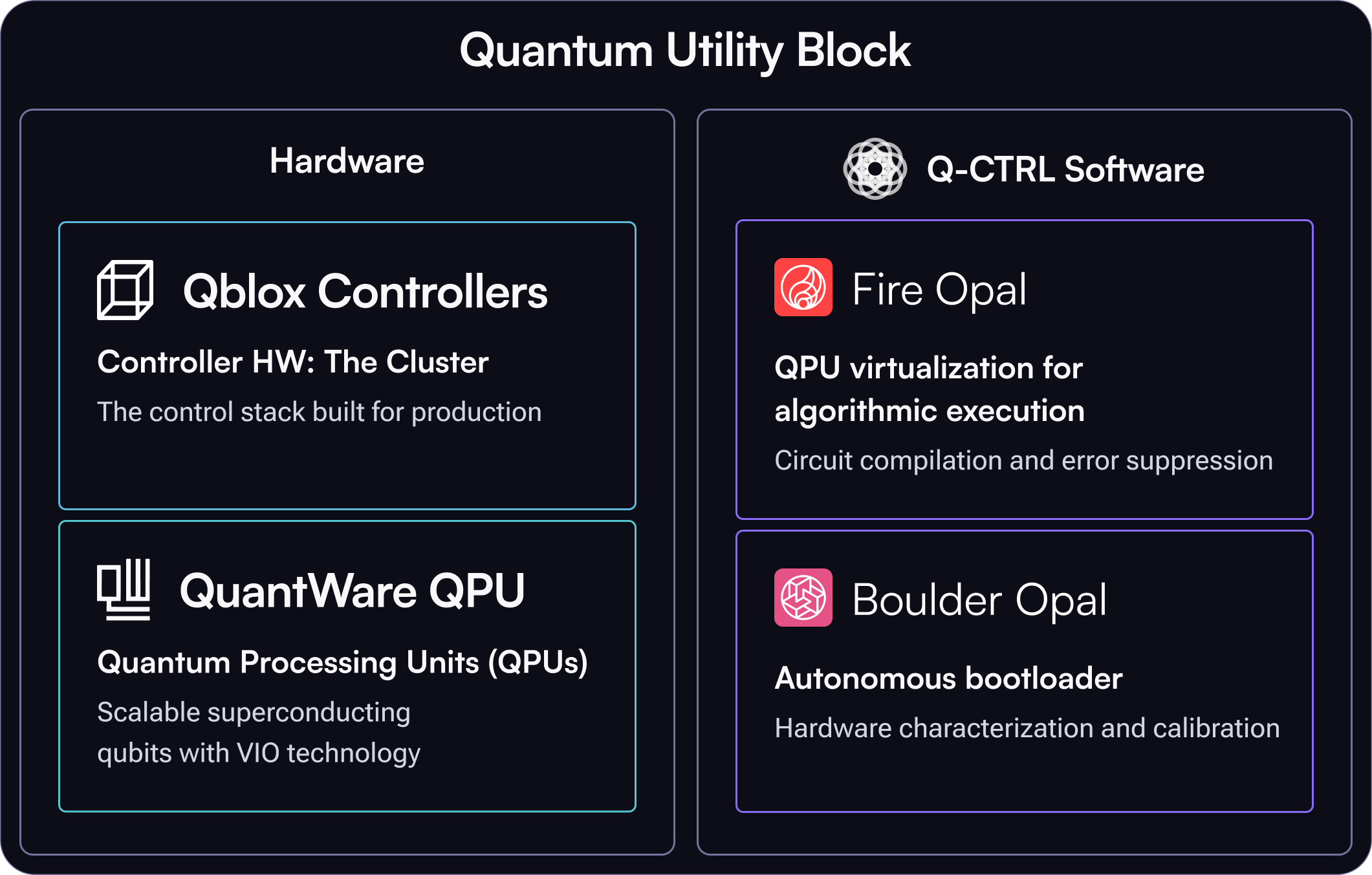
The Quantum Utility Block (QUB) is a family of pre-validated, reference architectures for on-premises quantum computing jointly engineered by QuantWare, Qblox, and Q-CTRL. Built on interoperable hardware controlled by intelligent autonomous software, QUB delivers a modular, circuit-ready quantum computer that eliminates traditional procurement, installation, and operational barriers.
Choose from three QUB sizes – Small, Medium, and Large – designed for on-premises deployment for lab, enterprise, and HPC use-cases.
Your fastest path to quantum performance
QUB quickly delivers enterprise-ready outcomes from the moment your project begins:
- Accelerated deployment: Validated architectures based on interoperable components reduce procurement from years to months.
- Operational readiness: Autonomous calibration and performance management software minimize reliance on scarce quantum expertise and prepares systems for integration with hybrid HPC infrastructure.
- Reduced total cost of ownership: Modular design and unified support reduce ownership costs by up to 10X.
- Scalable growth to utility: Open, upgradable configurations grow to thousands of qubits and provide a clear upgrade path towards quantum utility.

QUB lets you rapidly deploy a high-performance, readily available system that scales with your needs.
Building the software-defined quantum data center
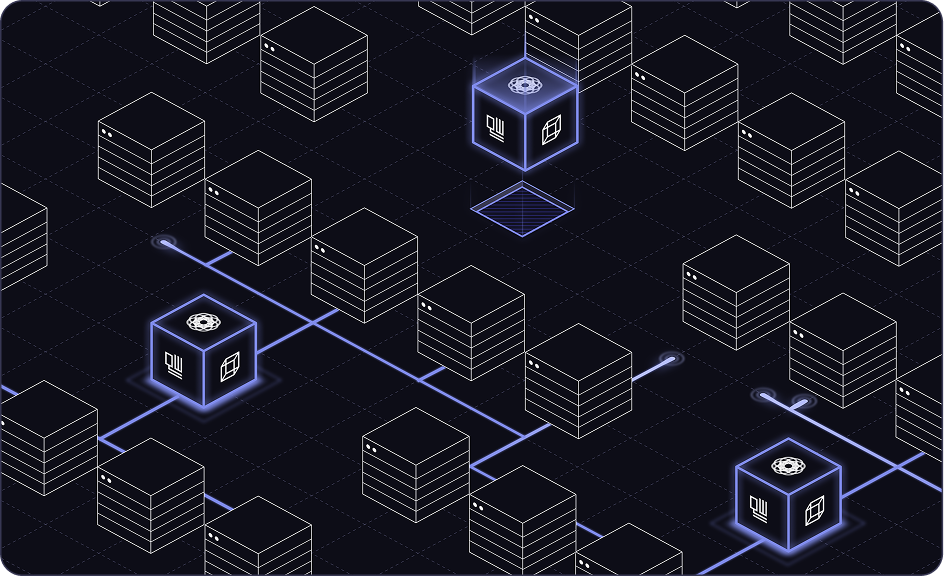
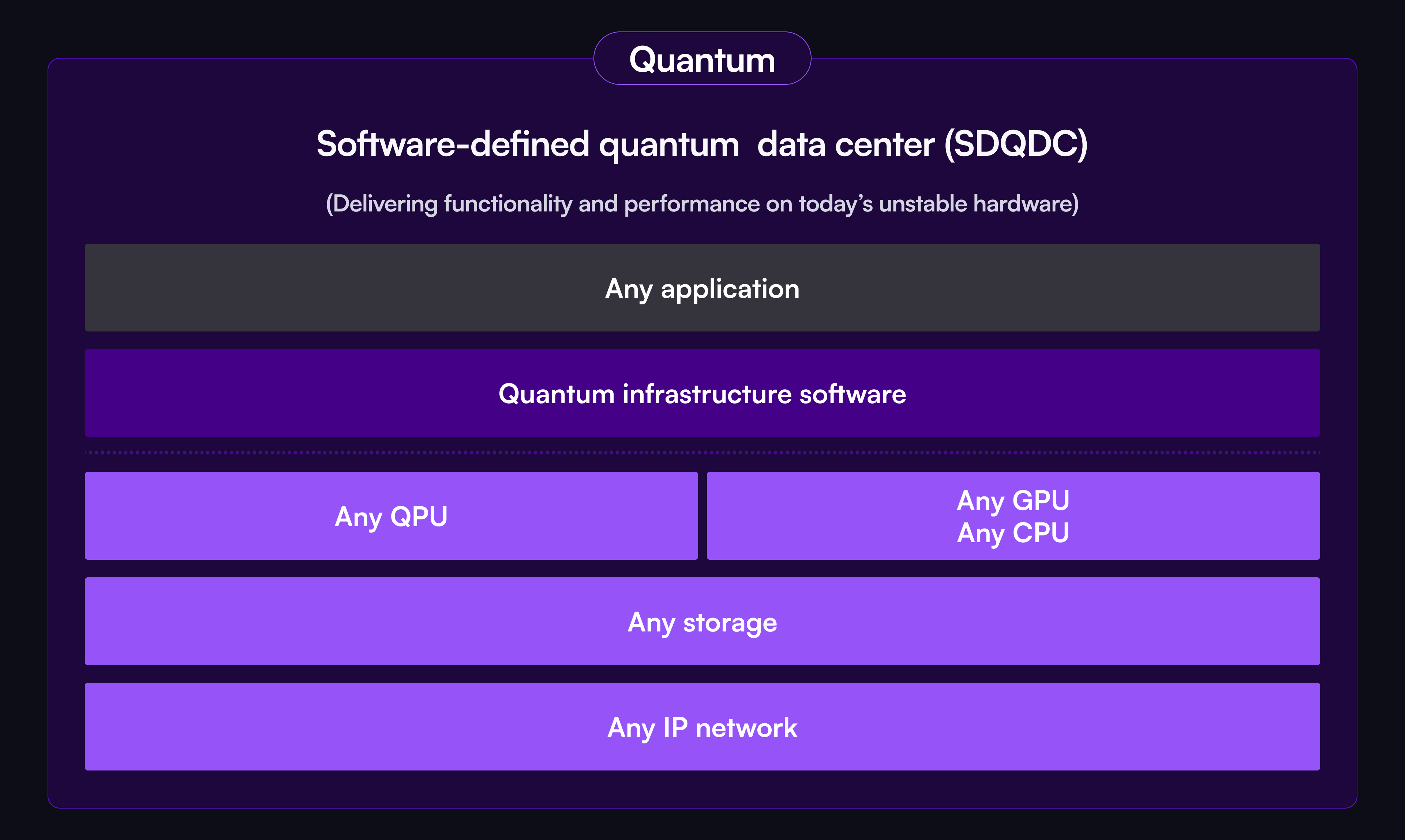
The promise of quantum computing is being realized through hybridization. The software-defined quantum data center brings together the best of CPU, GPU, and QPU to handle the most challenging computational tasks.
Data Center providers are rapidly engaging with the quantum computing community to make this vision real, and Q-CTRL provides the critical infrastructure software to make it work.
Achieve quantum value through intelligent autonomy
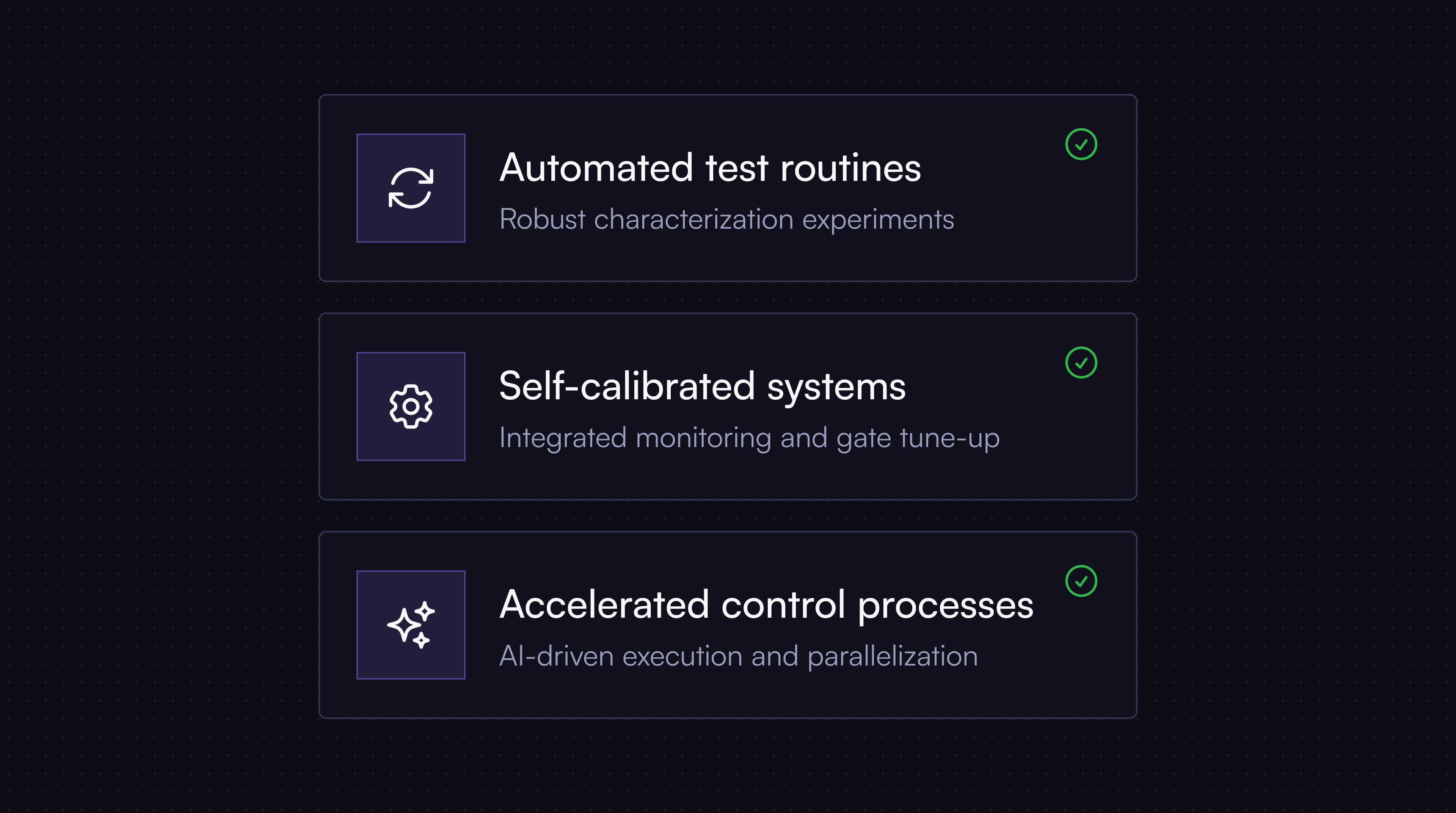
Deploying and operating quantum hardware in data centers is complex, requiring deep expertise to calibrate QPUs, optimally tune performance, and maintain stability through frequent manual interventions. These challenges slow integration, drive up costs, and limit the system’s usable uptime.

Our users leverage Boulder Opal Scale Up to accelerate deployment and simplify maintenance through intelligent autonomy. AI-powered infrastructure software delivers rapid calibration, repeatable performance, and streamlined operations without the need for an on-site expert team.
With Boulder Opal Scale Up IT teams can manage quantum systems confidently, and deliver maximum value to their customers.

Unlock quantum computing for every user
A significant hurdle in quantum adoption is the specialized knowledge required to program and effectively utilize quantum hardware in hybrid workflows. End users, particularly those without advanced quantum physics backgrounds, find it difficult to meaningfully deploy quantum processors for their problems, and lack awareness of the critical performance-management tasks required to secure useful outputs even from cutting-edge devices. Today, quantum computers are only useful by quantum computing experts - that must change.

Data center and HPC operators use Fire Opal to provide critical virtualization technology enabling end users to abstract away the details of the underlying quantum hardware and program at the problem level. Through frictionless, automated performance management and tools for hybrid CPU/GPU/QPU workflow orchestration, Fire Opal makes quantum computers a truly useful computational accelerator for any end user, no matter their background.
With a simple integrated option, Fire Opal empowers end users to confidently unlock the full potential of quantum computing


Unlocking maximum performance for hybrid quantum-classical computing with RIKEN
Integrating Q‑CTRL’s Fire Opal into our IBM Quantum System Two environment gives users the ability to run more efficient, accurate quantum circuits without needing to change how they work. This is a meaningful step forward in enabling scientific and industrial progress through our quantum-HPC integrated platform.
Learn how autocalibration brings quantum to HPC and data centers
Real-world use cases