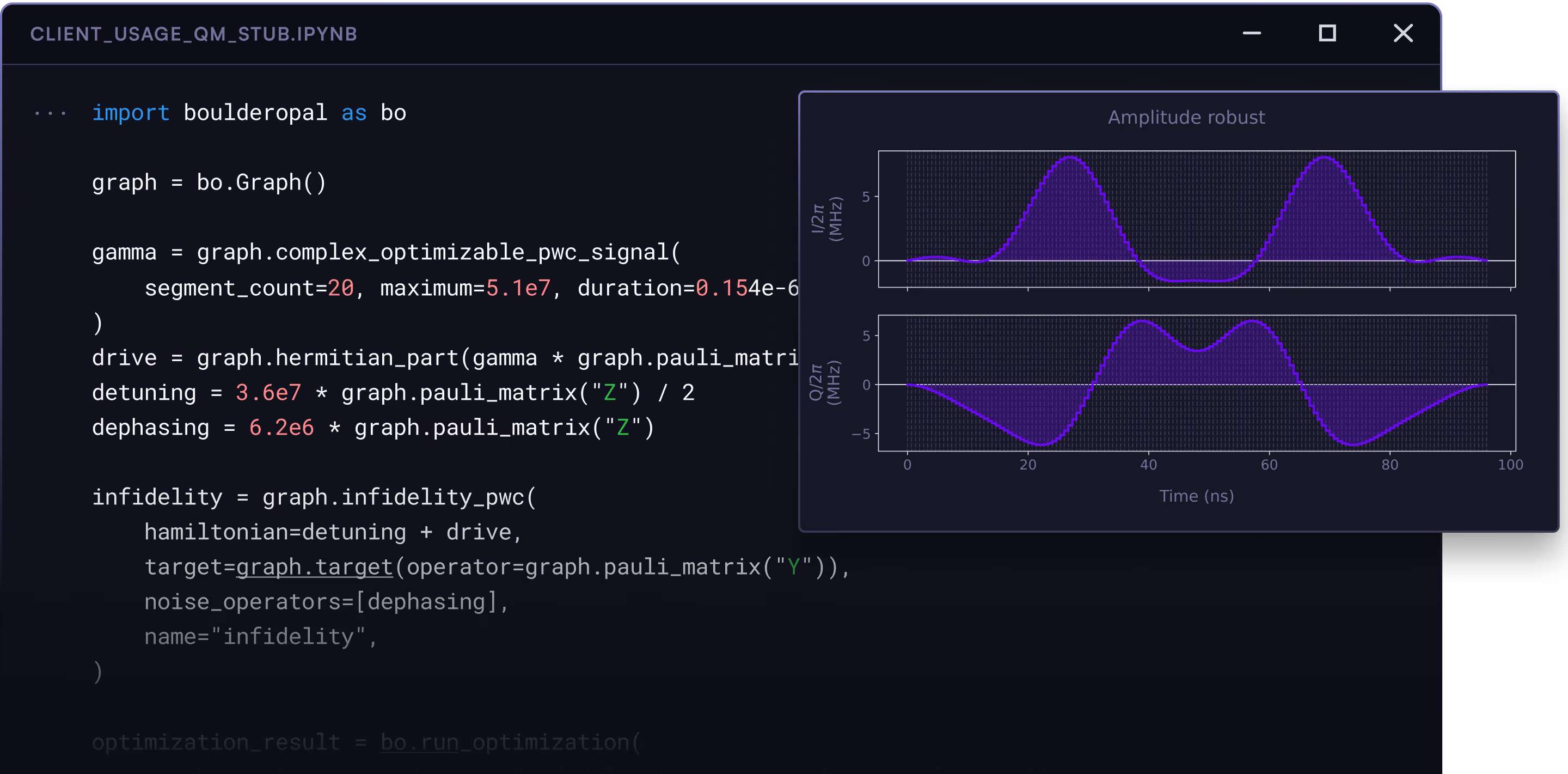
Design superior quantum hardware
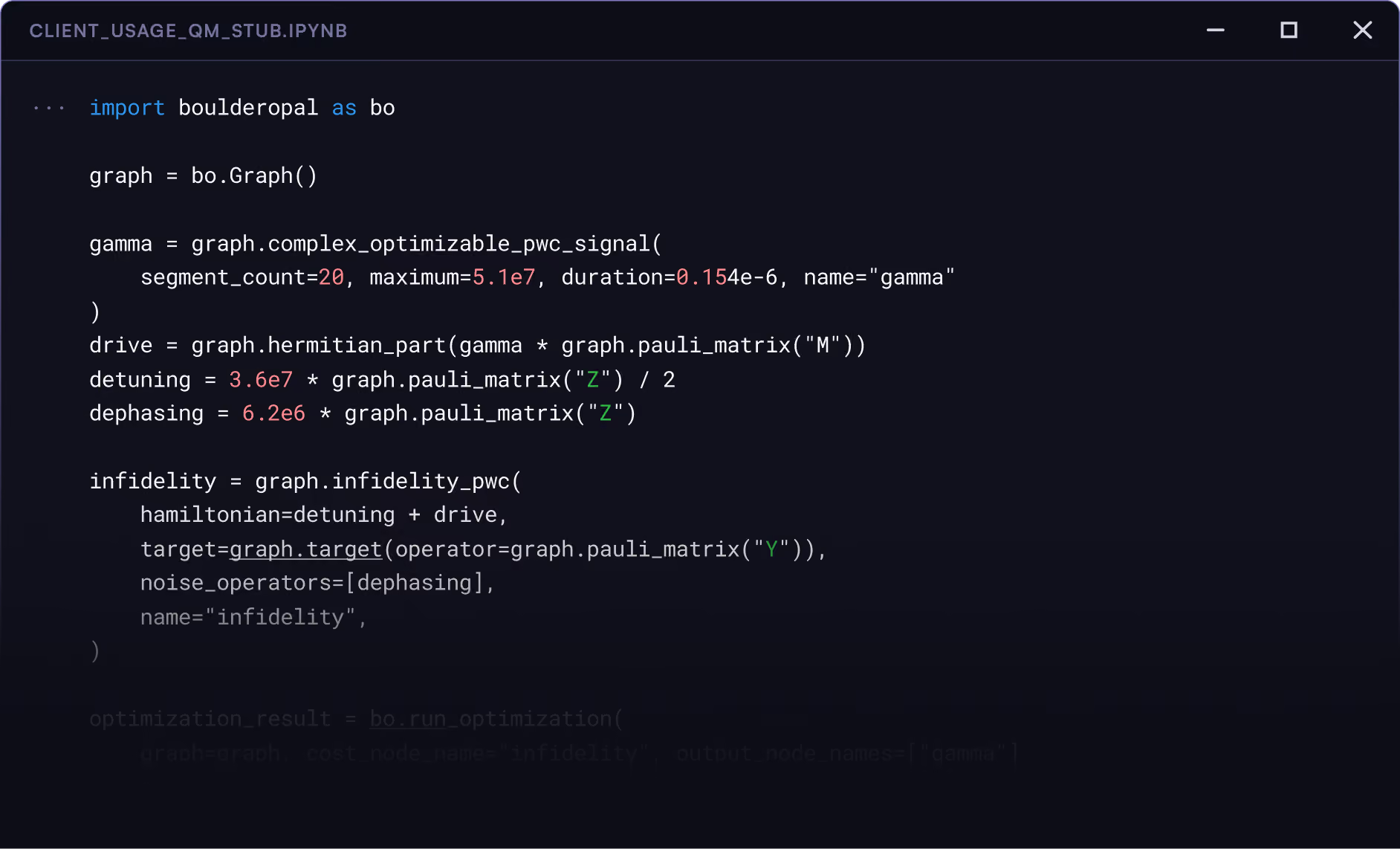



Hardware instability kills performance
Don't let decoherence, noise, and errors stop your research.
Overcoming instability is essential to building the next generation of quantum hardware. Whether it's a new device architecture or a unique quantum system, controlling the quantum realm is always a bottleneck.
The old ways—manual operation, on/off pulsing, purely analytic models—just can't keep up with the pace of innovation. Researchers at the cutting edge need access to quantum control solutions as advanced as their hardware designs in order to push the frontiers of knowledge.
Solve fundamental quantum hardware and control problems
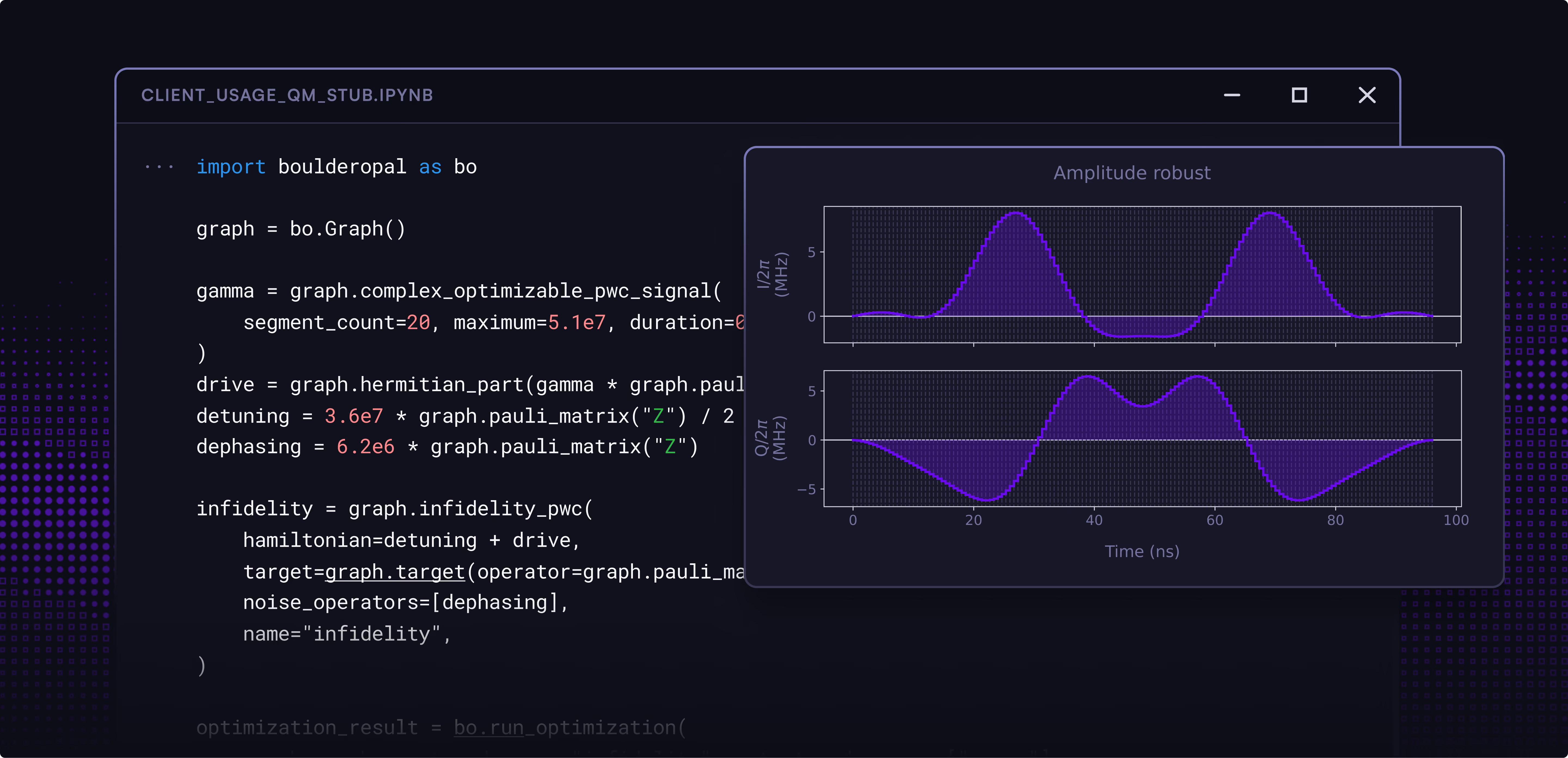
Gain the insights you're seeking by putting quantum control to work
A complete toolkit spanning Hamiltonian-level simulation, control design, and closed-loop optimization.



Quantum control toolkit for hardware researchers
Accelerate your hardware research and development.
Universal compatibility
Get up and running in minutes with your existing stack.
Leverage universal control techniques that function above the physical qubit. Add powerful new capabilities with minimal effort, whether you use common Python packages or a wide range of control electronics.

Software
Qiskit, Quil, and QuTiP.

Controllers
ARTIQ, Keysight, Qblox, Quantum Machines, Tabor Quantum Solutions, and Zurich Instruments.

Supported modalities
Superconducting qubits, silicon qubits, trapped-ion qubits, neutral-atom qubits, color centers, and NV diamonds.
Validated by hardware teams
Boulder Opal enables cutting-edge research and product development to push the boundaries of what's possible with quantum hardware.

What teams are saying about Boulder Opal Toolkit
The breadth and flexibility of Boulder Opal allowed us to create our own optimization scenario and obtain pulses robust to the five most relevant experimental noise sources at the same time! This will be crucial in the development of atomic interferometers to detect dark matter and gravitational waves at currently unexplored frequencies.
In a qubit-based model, the redundancy required for error correction comes at the cost of using many physical qubits to construct a single logical one. The resonator has an infinite number of levels and there are several proposals to explore this large Hilbert space for better redundant encodings.
Given the complexity of the physics at play, being able to perform closed-loop optimization of a few physically motivated parameters of the quantum error correction protocol with Boulder Opal is very valuable to us.
Built for every stage of quantum hardware development
From exploratory research to advanced device optimization, choose the capability and support that fits your team's goals.
Basic
$0
Free Basic plan, yearly limits apply
For beginners, students, and explorers
Cloud software platform
4 vCPU, 32 GB RAM machine
1 machine (1 calculation at a time)
12 cloud machine hours
Standard support
Essentials
$1,500
USD / year
Managed compute for small teams
Cloud software platform
8 vCPU, 64 GB RAM machine
1 machine (1 calculation at a time)
200 cloud machine hours
Standard support
Performance
$5,000
USD / year
Expanded computational resources for performance minded teams
Cloud software platform
16 vCPU, 128 GB RAM machine
Up to 4 machines (1 calculation per machine)
400 cloud machine hours
Standard + solutions engineering support
Professional
Custom
Request a quote
HPC-like resourcing for demanding teams of scientists and engineers
Hybrid cloud software platform
32 vCPU, 256 GB RAM machines
Up to 16 machines (1 calculation per machine)
1600 cloud machine hours
Dedicated + solutions engineering support
Real-world use cases






Frequently asked questions
A locally installed version of Boulder Opal can be provided upon request for circumstances mandating ultra-low latency in hardware communications. We recommend the cloud instance for general computations, as cloud services can provide performance far exceeding the specifications of the local machine.
Number of hours of running a single cloud-hosted CPU machine in a year. You can buy additional machine time to supplement your Essentials, Performance or Professional plan.
You can access a comprehensive documentation suite to help you on your journey, starting with our Get started guide and Tutorials.
The number of calculations that can be run concurrently across multiple cloud-hosted machines to accelerate computation. Having a higher concurrency is useful when you want to speed up your calculations or share computational resources within your team.
We have independently validated and published technical validation of key demonstrations on hardware through our research - this includes device-level demonstrations of improvements >10X. We have also established a range of hardware validations with our customers and R&D partners around the world, collected in our case studies.
Boulder Opal licenses can accommodate an unlimited number of users, but may be limited in the number of systems that can be connected.
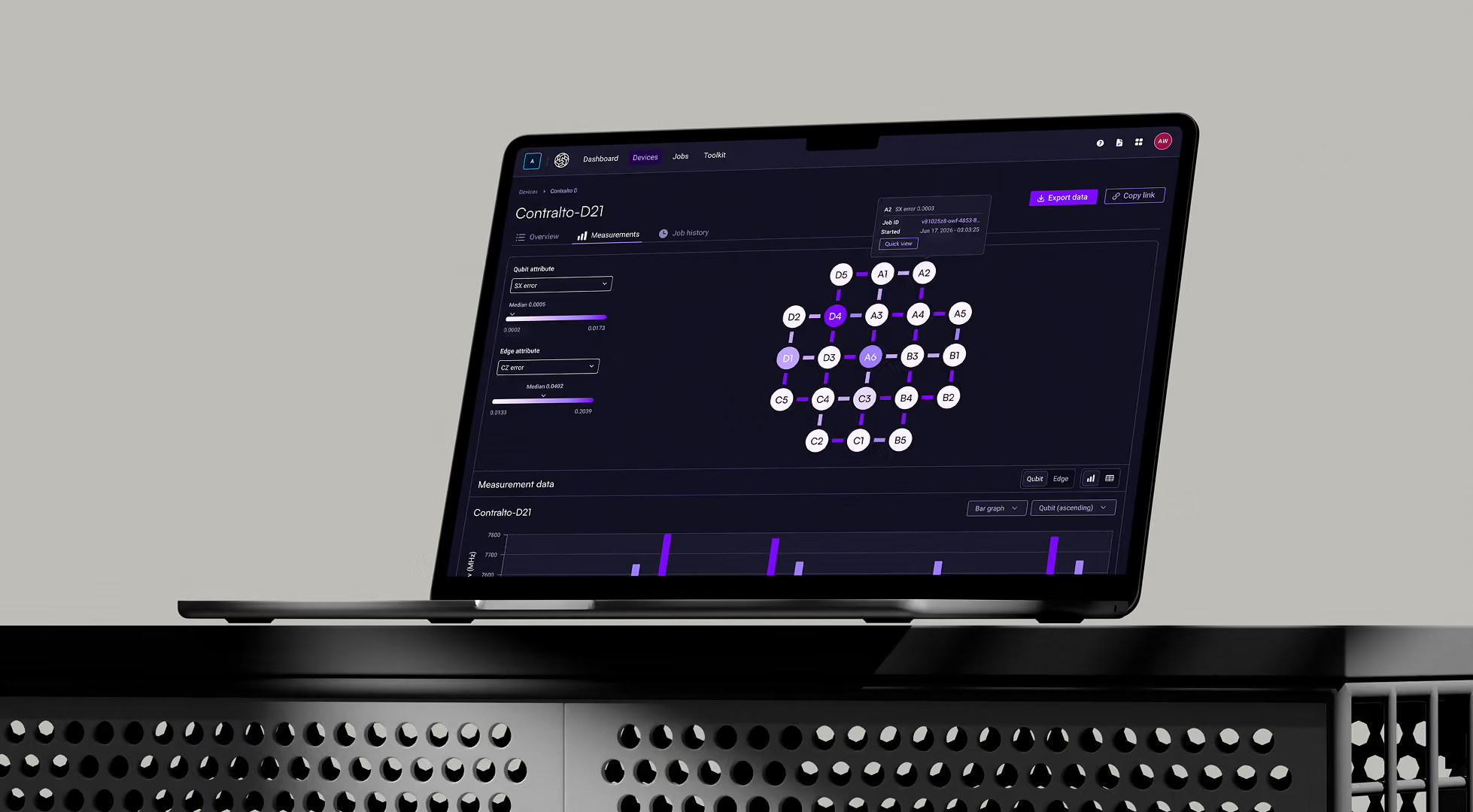

Accelerate quantum
hardware research