Making quantum computer calibration autonomous, informative, and easy
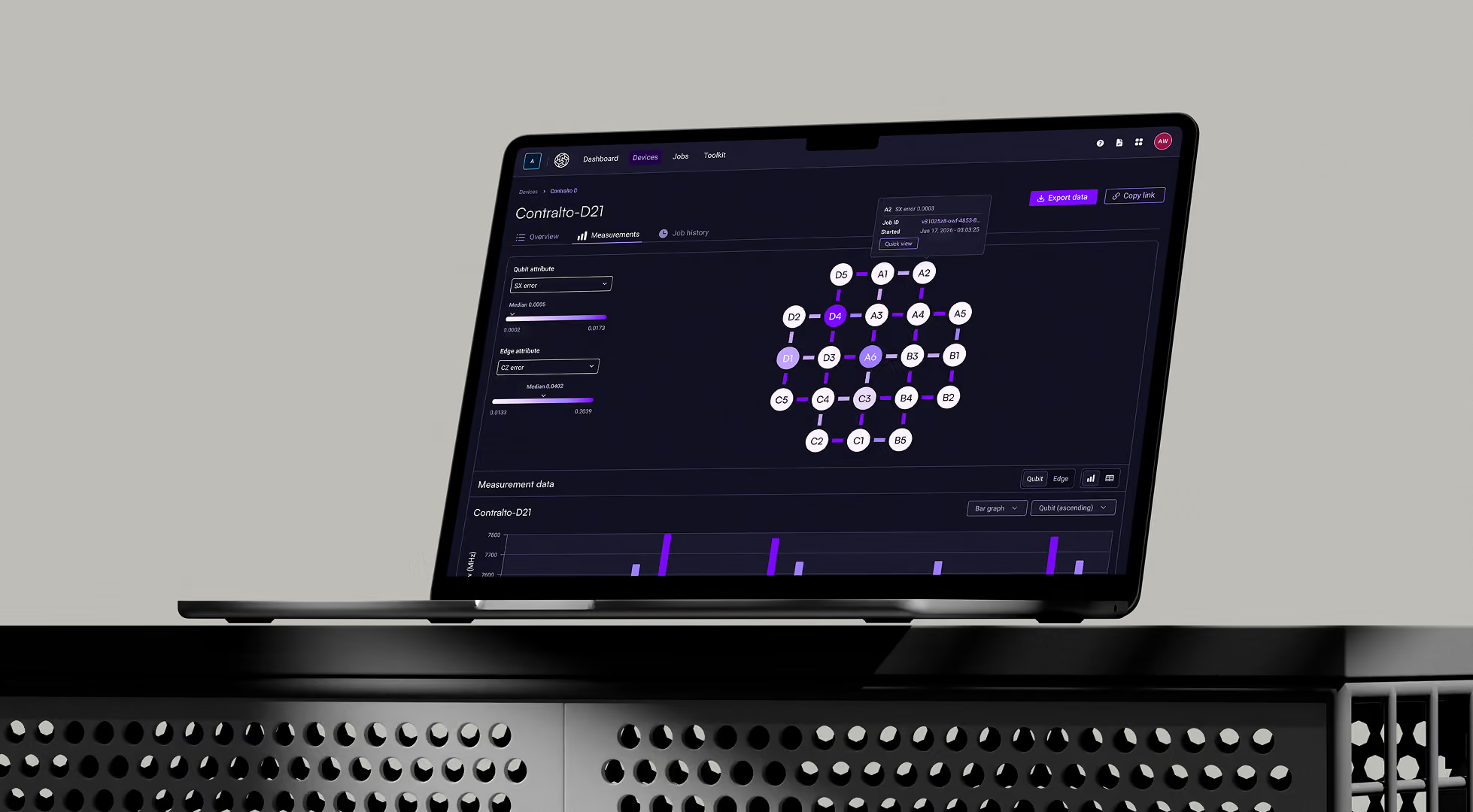

Quantum computer calibration is one of the most important and persistent challenges in the field. Before a quantum processor can ever run an algorithm, its physical qubits must be characterized and then tuned to enable quantum gates that perform reliable quantum operations. Dozens of parameters have to be tuned, and many of them are correlated such that changing one setting induces changes in others. As the number of qubits increases, the complexity of this process explodes.
Manually finding the best configuration—even with automated scripts—is exceptionally difficult. And then, just as you find a reasonable operating point, the system drifts, and everything changes. Trained researchers can spend nearly all of their time just trying to find workable operating points on modestly sized devices.
Boulder Opal provides a push-button solution to tune up and maintain quantum processors of any scale. You go from nothing to a fully operational device with no human intervention, even when things go a bit awry, as they always do in the lab. And you don’t even have to build workflows. Boulder Opal offers fully configured solutions tailored by our expert team to the calibration tasks routinely faced on the most advanced devices.
Let’s look in detail at what it offers for real commercial QPUs.
Real results on real QuantWare QPUs
As quantum systems grow in scale, calibration is no longer just a technical hurdle. It is an operational bottleneck.
If you want to advance your research, it’s not sufficient to just tune a device. The process needs to deliver:
- Speed: Complete calibration tasks quickly to maximize uptime and minimize drifts.
- Consistency: Maintain repeatable parameters over time and across users.
- Performance: Continually achieve high gate fidelities.
And for those of you who are hardware experts, the process should give meaningful insights to help you understand and debug the hardware.
At Q-CTRL, we designed Boulder Opal to meet those standards, and we are happy to prove it with data.
For example, on QuantWare D-Line QPUs, Boulder Opal consistently and autonomously tunes entire devices to peak performance every time in hours instead of days.
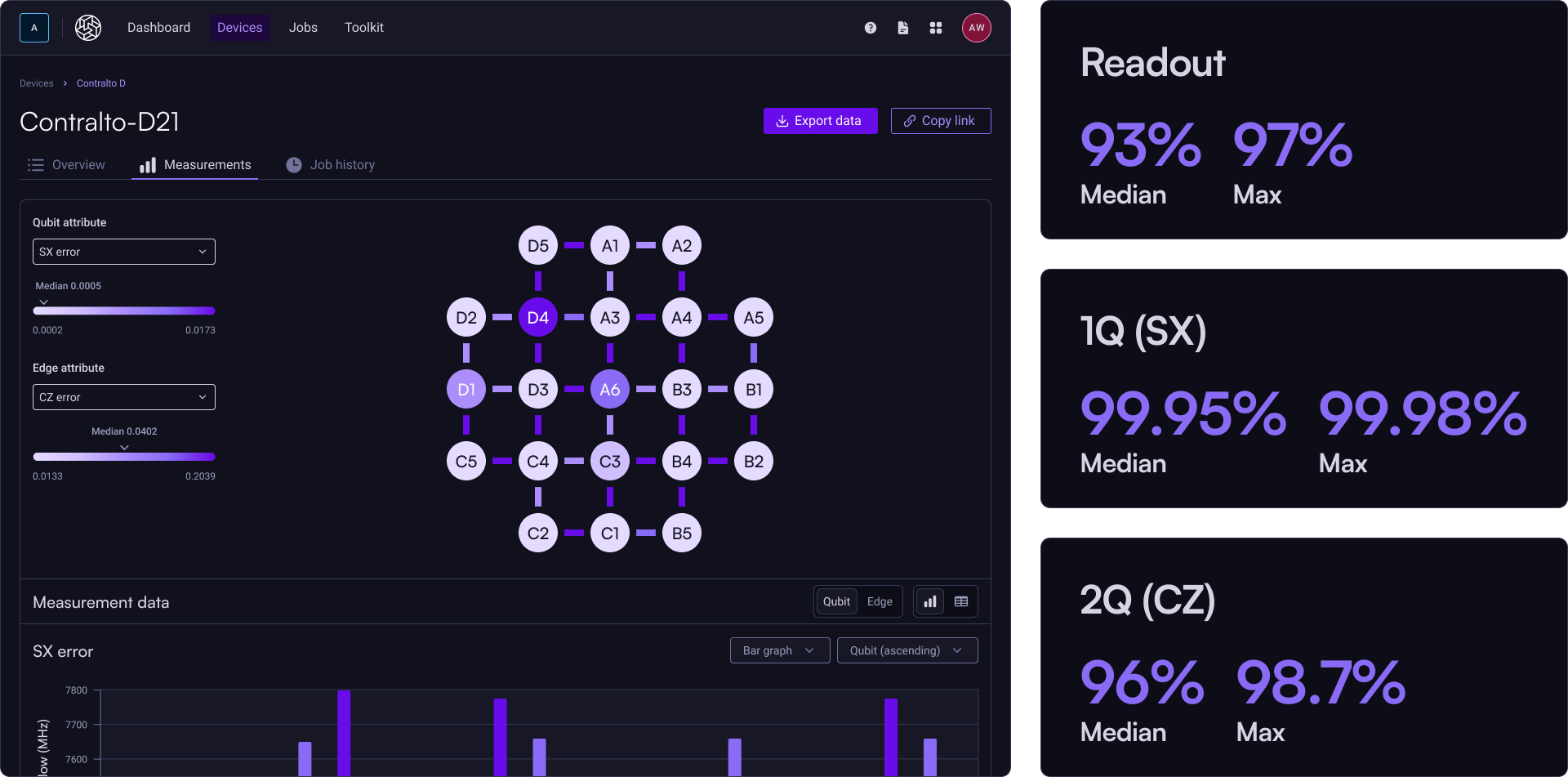
The fundamental building block of a QuantWare D-Line QPU is a feedline connected to five qubits. With each feedline, Boulder Opal can complete calibrations to the above performance targets in under three hours, from an absolute cold start. The software handles errors autonomously, such as when frequencies are outside expected scan ranges, and uses closed-loop automated procedures to save massive amounts of time.
The way we’ve built intelligent autonomy in Boulder Opal combines these features to deliver truly transformational capabilities. As we previously described, Boulder Opal’s autonomous processes are so clever and robust that they can even resurrect qubits deemed by expert human operators to be dead!
It does this while generating a full definition of the QPU state, with relevant plots and key parameter values to give you the insights you need. You also get visibility into what is happening throughout the calibration process through an intuitive data visualization interface built to show you what experts want to know. This interface gives users direct insight into device parameters, performance metrics, calibration jobs, and historical data.
These are not one-off hero experiments or fragile workflows that work for some qubits some of the time and require constant human intervention. They demonstrate what autonomous calibration can deliver today. More importantly, they point to a different way of operating quantum computers: one where calibration is an automated, repeatable, systematic process that frees expert teams to focus on high-impact quantum research rather than manual, routine maintenance.
Here’s how it works.
Turn manual QPU calibration into an autonomous, hands-off operation
Autonomous calibration is more than automating a sequence of calibration scripts.
Production QPUs operate in unpredictable real-world environments where components drift, parameters fall out of range, and experiments fail. Boulder Opal manages these conditions by encoding architecture-specific calibration workflows into a robust state machine. For hardware like a QuantWare D-Line superconducting QPU, it autonomously evaluates results, responds to anomalies, and determines next steps, delivering a repeatable bring-up process without requiring an expert operator to babysit every run.
A typical bring-up includes a series of routines covering the key stages of device characterization and calibration, such as TWPA (a form of cryogenic amplifier) calibration, resonator mapping, transmon discovery, transmon coherence characterization, and 1- and 2-qubit gate calibration. And, of course, for each task, multiple parameters must be iteratively calibrated as they’re rarely independent.
This process delivers whether you're interested in low-level qubit control and performance or running quantum circuits. Each routine generates data you can inspect, compare, and use to understand the device's changing state. For hardware experts, the resulting operating conditions provide actionable insights into what’s changing and limiting the device. Similarly, for algorithmic research, the optimized control waveforms are ready and waiting for higher-level algorithmic execution with peak performance. With the breadth and depth of details returned, Boulder Opal's consistent automation of calibration tasks creates an efficient, optimized experience for a variety of quantum use cases.
See your QPU through every stage of calibration
True autonomy should go hand in hand with full transparency.
Boulder Opal gives you full visibility into every parameter, plot, and pulse generated during the bring-up process, even though you don’t need to be involved in collecting them! Every calibration job generates valuable information about the QPU, made available through a web-based data visualization dashboard.
Users get an accessible, intuitive way to explore device data, investigate performance, track calibration history, and free up real time to advance core research questions. The videos below show examples of each routine supported by Boulder Opal, with samples of the parameters collected and data visualizations generated. These represent just a subset of the complete results.
These routines can be run ad hoc on individual components for expert users, or orchestrated together across the whole device for a completely autonomous bring-up of the entire system. Plus, all of the underlying experiments are available for your use – Rabi, Ramsey, spectroscopy, closed-loop gate calibrations, etc.
And we will soon release a real-time QPU dashboard within Boulder Opal featuring live system-status snapshots and time-series views to track the behavior of every individual component and parameter in your diagnostics.
Setting the industry standard for quantum calibration
As quantum hardware scales, true performance depends on combining high fidelity with repeatable behavior. We need calibration processes that are fast, reproducible, and transparent while delivering consistent outcomes across the entire device.
This short explainer is only the beginning of how we’re working to deliver real benefits to QPU and quantum system owners.
Q-CTRL will continue releasing technical updates, expanded data sets, and benchmarking insights to set the bar for what’s possible in autonomous quantum hardware calibration. In addition, the following features will roll out through late 2026:
- Support for QuantWare A-Line QPUs: Expanding our support to the next generation of QuantWare devices, ensuring autocalibration is available for tunable-coupler devices purpose-built for QEC and algorithm-ready workloads.
- Run-time recalibration: A new operating mode will expand from full bring-up to continuous, autonomous re-tuning to catch drifts before they become a problem. This significantly reduces the experiment times shown above by performing rapid fine-tuning of known parameters, maintaining peak performance while maximizing system uptime.
- Routine parallelization: Execute calibration tasks concurrently to reduce total system calibration time.
- Continuous fidelity improvement: We’re always updating core routines to deliver higher, more stable gate fidelities.
- Interoperability with Fire Opal: Connecting autonomous calibration directly to no-fuss circuit execution, so systems calibrated using Boulder Opal are also able to leverage the world-leading circuit-level error suppression and compiler tools in Fire Opal.
These new features will become accessible to all active Boulder Opal users, so system operators can focus on critical research goals while Boulder Opal handles system calibration and device management.
The end goal is a fundamentally different way to operate a QPU. Focus on the work that matters most to you. Let Boulder Opal handle the rest.
QuantWare customers are eligible for an exclusive 30-day free trial of Boulder Opal.
Contact us to start your trial and experience fully autonomous bring-up in hours.