Deploy quantum computers at scale



Unscalable PhD-reliant operations
As quantum computing scales, manual operation cannot keep up
Imagine Apple without macOS. Or the PC without Windows or Linux. That's how today's quantum processing units (QPUs) ship. The need for manual, expert-driven operation and maintenance is blocking the deployment of quantum computers at scale in the environments that matter most—data centers.
And today's expert-driven stopgaps are failing as the complexity of booting, operating, and maintaining these systems is outstripping even the most savvy technical teams.
Autonomous calibration tailored to your hardware

Intelligent autonomy
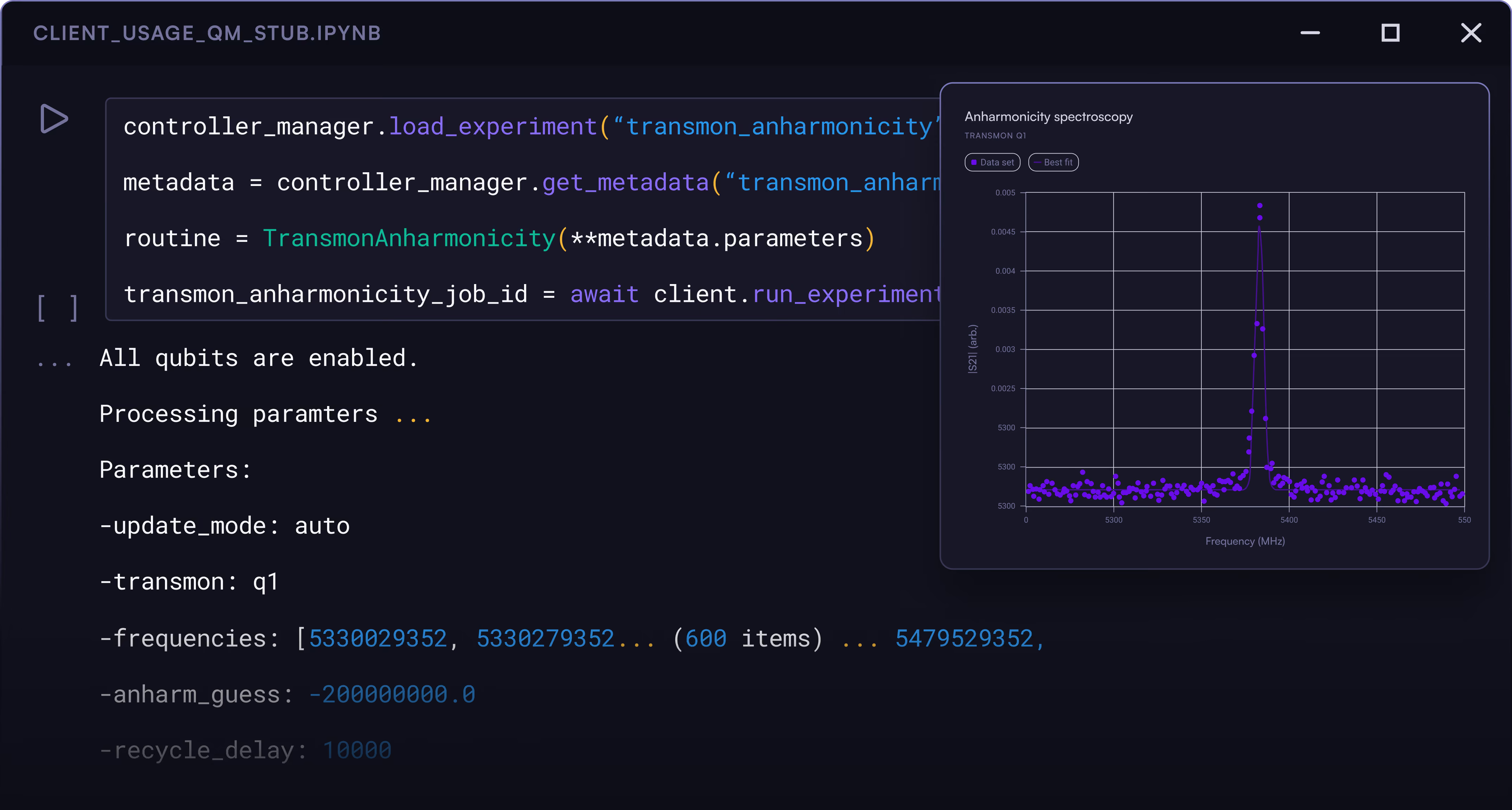
Execute PhD-level workflows without having to manage the workflow yourself; autonomous exception handling keeps your system online.

Hardware bringup and retuning
Accelerate initial calibration and maintain performance beyond what's achievable manually using full pre-built workflows.

Controller interpreters
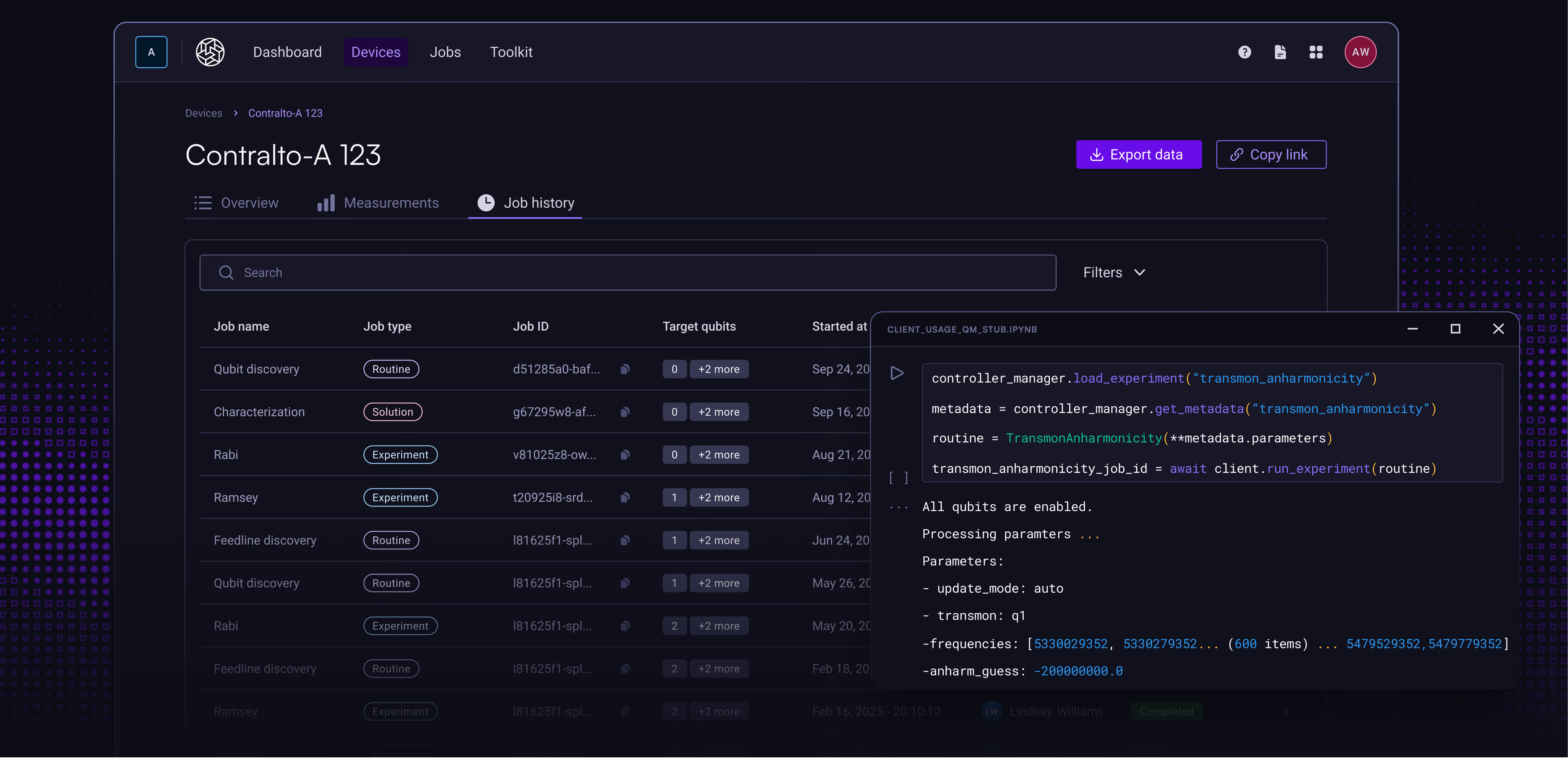
Translate control tasks across controller vendors, simplifying deployment and ensuring solution portability.

Data management and reporting
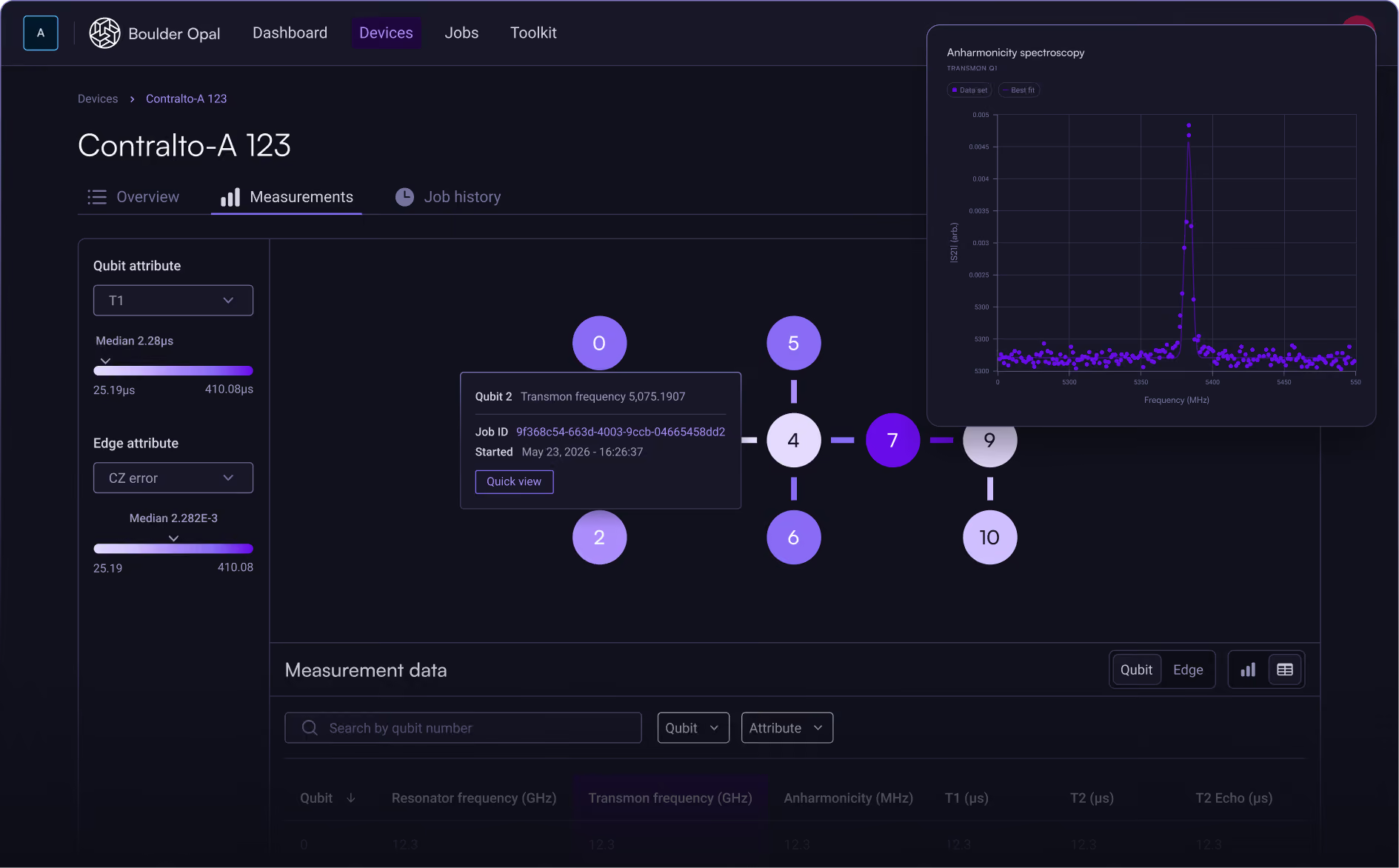
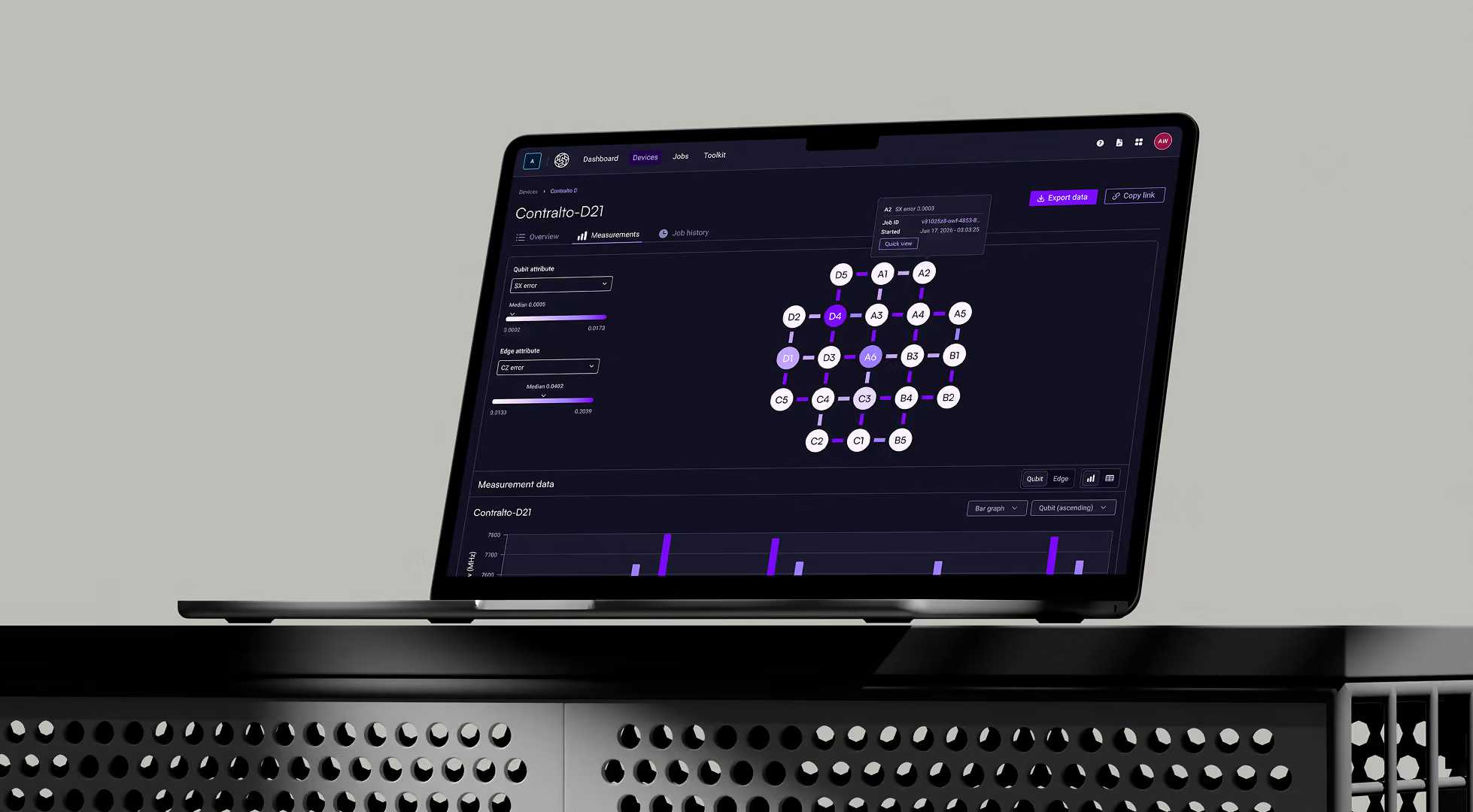
Map calibration results to a virtual device for easy data recall, analysis, and visualization.
Results you can measure
on your own hardware
From raw hardware to peak performance
Achieve sustained performance without human intervention. Boulder Opal's intelligent autonomy delivers PhD-level expertise for hardware calibration and maintenance, with fully automated error handling.
 01
01Automate
Automate
 02
02Stabilize
Stabilize
 03
03Virtualize
Virtualize
 04
04Deploy
Deploy
Built for quantum system operators
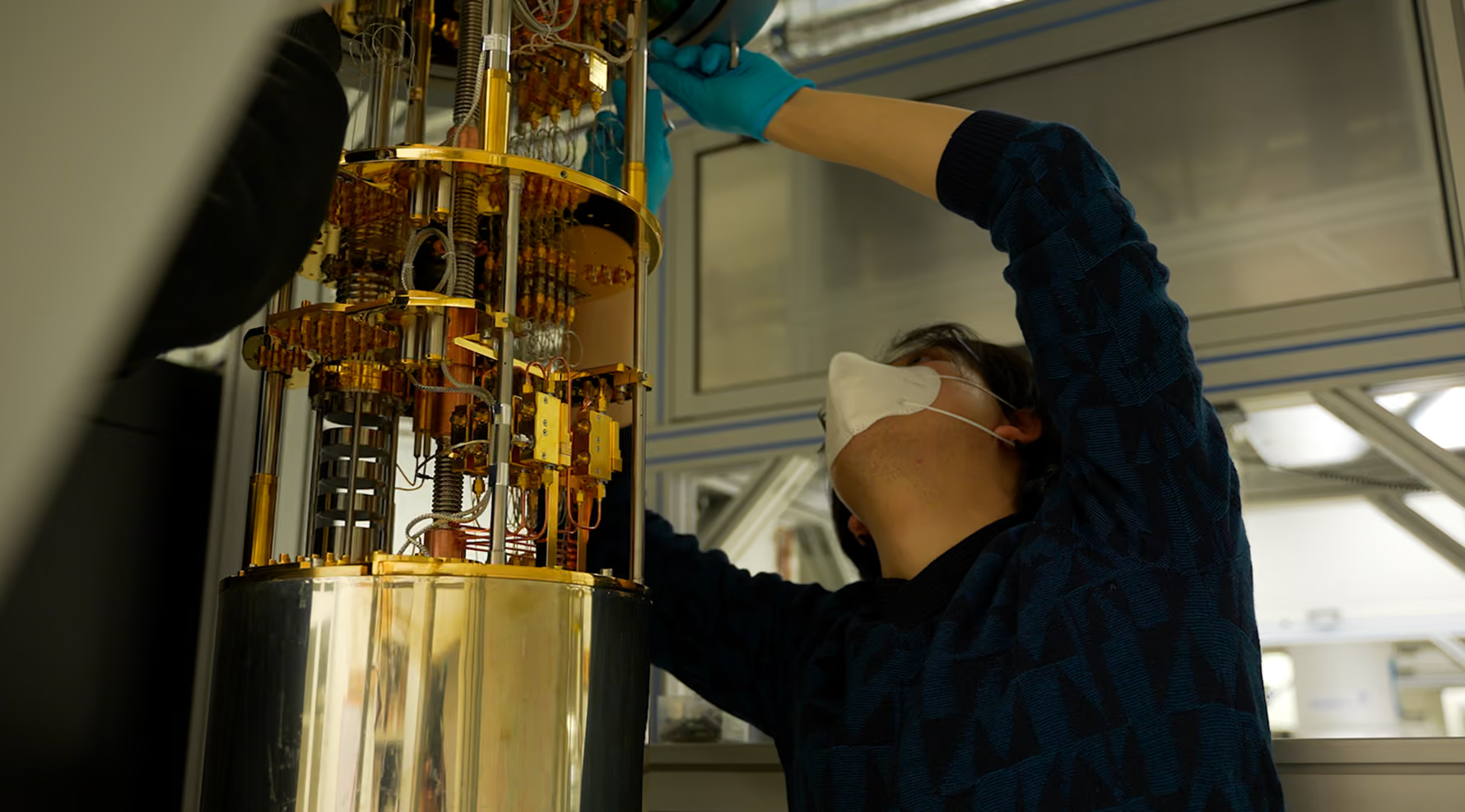
Maximize team effectiveness and operational efficiency.
Purpose-built for your quantum architecture
Solutions that work for your unique quantum system.

QPU vendors
Anyon, Equal1, QuantWare, and Rigetti.

Controllers
Qblox, Quantum Machines, QubiC (coming soon). Support for custom and additional control vendors is available upon request.

Supported modalities
Currently supported: superconducting circuits and semiconductor spin qubits.
Custom support: trapped ion and neutral atom devices upon request.
Accelerating quantum deployment
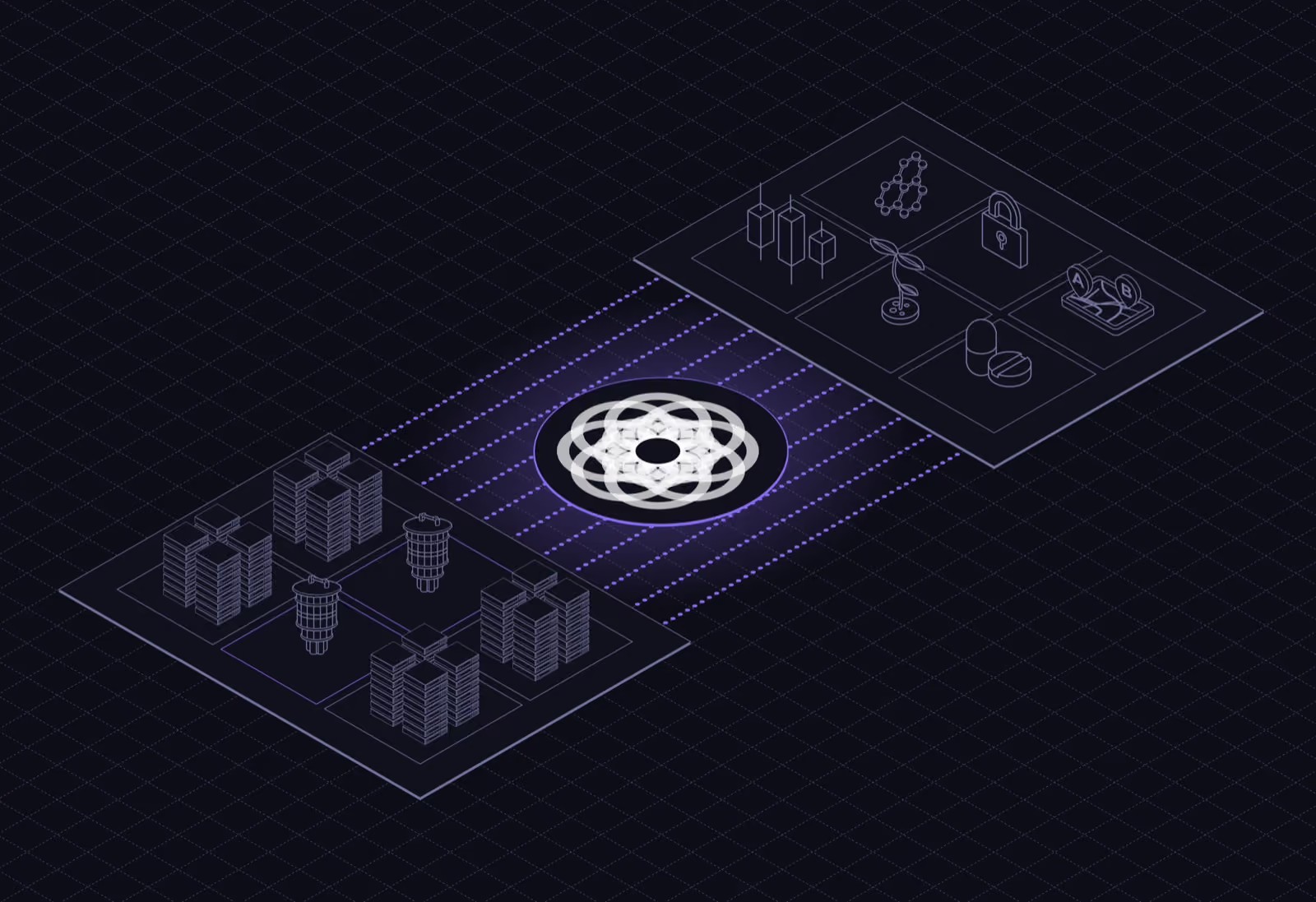
From data centers to research computing facilities, Boulder Opal makes it easy to deploy quantum computers with physics-informed AI.
Data center providers
Simplify quantum system integration and QPU bring-up
Maximize system uptime and performance
Reduce operational overhead and reliance on on-site physics experts
Quantum innovation centers
Maximize device uptime with fast, repeatable calibration routines
Accelerate research output with sustained peak performance
Free up PhD experts from manual calibration to focus on high-value R&D
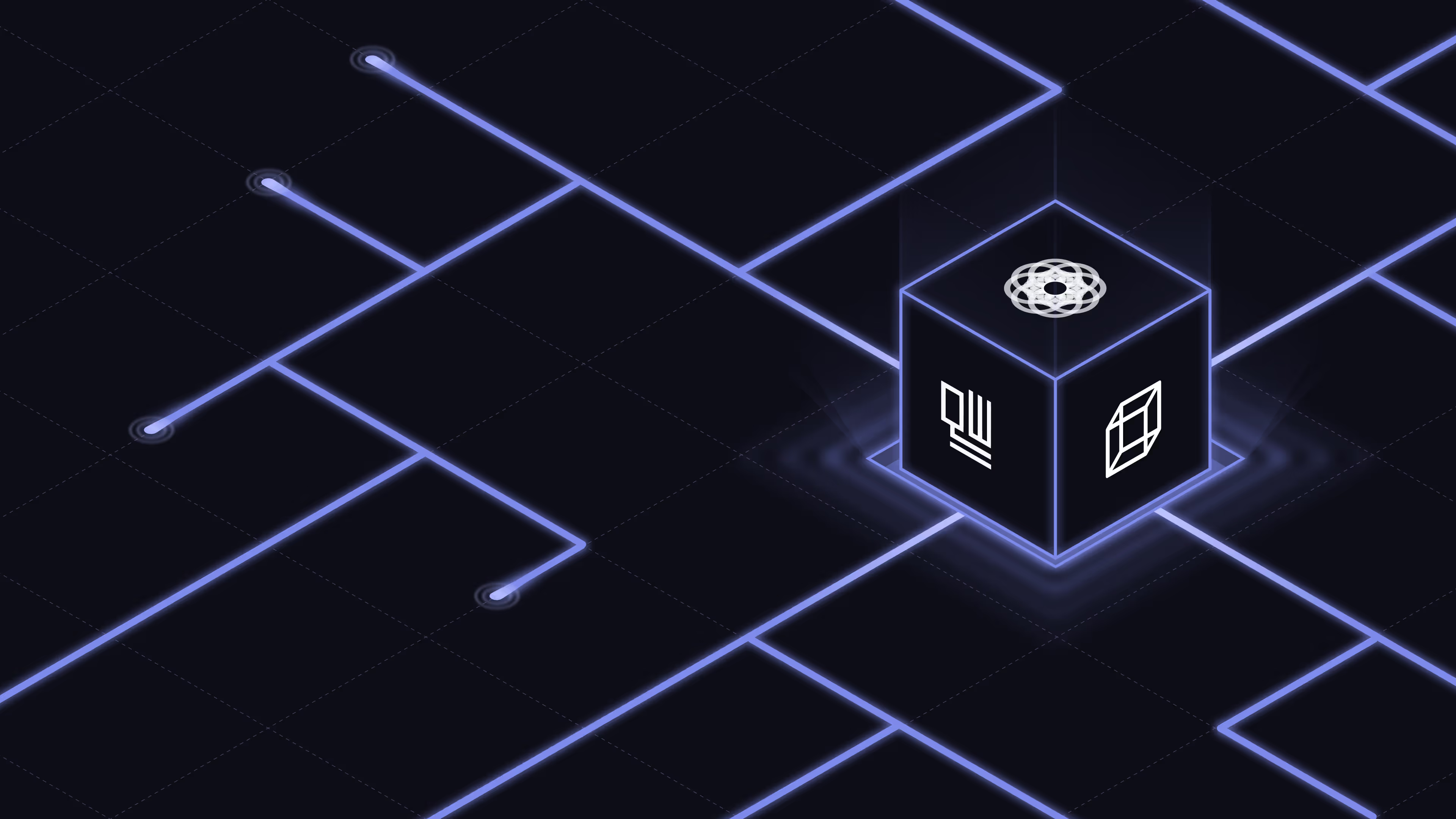
Quantum Utility Block (QUB)
Scale from individual QPUs to fully integrated quantum computing systems. QUB is a pre-validated, on-premises reference architecture jointly engineered by QuantWare, Qblox, and Q-CTRL.
QUB combines interoperable hardware with intelligent software and planned NVIDIA NVQLink integration to deliver a modular, HPC-ready system that simplifies procurement, integration, and operation.
Validated by hardware teams to transform their experimental capabilities
Boulder Opal enables cutting-edge research and product development to push the boundaries of what's possible with quantum hardware.

What teams are saying about Boulder Opal
As we rapidly scale our devices with our VIO technology, tuning up systems built with our QPUs needs to be automated. We are excited not just to use Q-CTRL’s software internally, but especially to help our customers scale their systems faster and with confidence. Boulder Opal with Contralto-A is an extremely powerful combination that will greatly expand the capabilities of our customers.
Our Open Architecture Quantum Testbed project pushes the bounds of quantum computing systems. By integrating software and hardware, we expand the focus beyond processors to the systems engineering required to develop the supply chain, engage more innovators, and accelerate development. We know autonomous calibration tasks, like those developed by Q-CTRL, are a key part to enabling that system-level approach, allowing more users to access quantum computing resources.
Equal1 has already proven that quantum hardware can be compact, rack-mounted, and data-center ready. Our partnership with Q-CTRL further accelerates our mission by providing a fully autonomous software stack. With Boulder Opal Scale Up integrated into our Bell-series systems, our customers gain a self-optimizing quantum accelerator that fits seamlessly into existing IT infrastructure.
Anyon’s modular quantum supercomputers, tightly coupled to NVIDIA GPUs via NVQLink, have been specifically architected for data center deployments, but the operational demands of quantum have been a continuous pain point for our customers. The partnership with Q-CTRL means our users can take full advantage of our hardware from day one and accelerate their quantum projects without having to worry about low-level quantum calibration processes.
Frequently asked questions
Boulder Opal is primarily deployed as a SaaS solution that uses a local Python client to connect with hardware, and call routines and infrastructure from the cloud. However, more local-heavy deployment options will be coming soon to minimize network latencies.
No, once you have a license that is connected to hardware, you can run routines against that hardware as often as you like. Note, some licenses offer site license options for unlimited systems, while others are only for one system.
You can access a comprehensive documentation suite to help you on your journey, starting with our Get started guide and Tutorials.
The number of calculations that can be run concurrently across multiple cloud-hosted machines to accelerate computation. Having a higher concurrency is useful when you want to speed up your calculations or share computational resources within your team.
We have independently validated and published technical validation of key demonstrations on hardware through our research - this includes device-level demonstrations of improvements >10X. We have also established a range of hardware validations with our customers and R&D partners around the world, collected in our case studies.
Boulder Opal licenses can accommodate an unlimited number of users, but may be limited in the number of systems that can be connected.

Automate your
quantum operations