Q-CTRL Defines the Path to Quantum Battlefield Information Dominance for Core Military Problems in Promising New Outlook

LOS ANGELES, CA – MAY 28, 2026 – Q-CTRL, the global leader in quantum infrastructure software, today released a white paper demonstrating the near-term capability for quantum computers, powered by its industry-leading performance-management software, to solve complex computational problems for the military. Q-CTRL projects quantum advantage for certain high-value defense logistics applications to arrive as soon as 2027, signaling a strategic edge for defense leaders who prioritize integrating quantum into their C4ISR roadmaps.
Modern defense systems must seize every capability across logistics and operational planning to ensure battlefield dominance. Designated as a critical technology by the U.S. Department of War, quantum technologies represent the next frontier in this domain. Through a series of detailed case studies, Q-CTRL describes how embracing quantum technology now can deliver operational resilience, strengthened defense posture, and tactical overmatch for the warfighter.
In today’s threat environment, operators are facing coordinated unmanned systems, cruise missiles, and ballistic threats arriving simultaneously from multiple vectors. By integrating quantum optimization into active defense architectures, we can compress the decision cycle between C5ISR sensing, tactical decision making, and interceptor employment. The result is a faster, more adaptive defensive posture that maximizes limited assets, expands defended battlespace coverage, and gives commanders a measurable operational advantage in highly contested environments. James Otten, JICO, Flight Test Execution, U.S. Missile Defense Agency
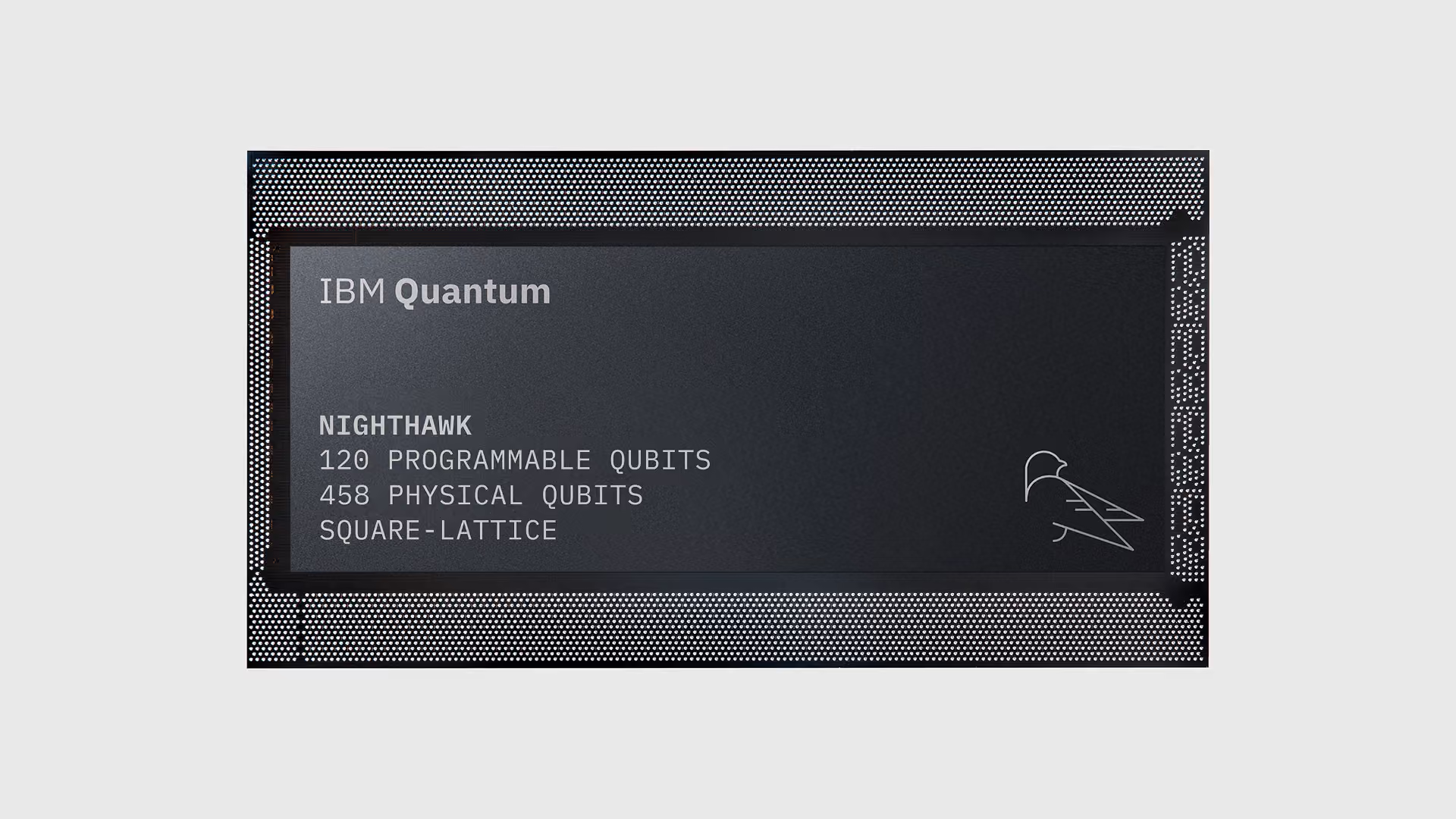
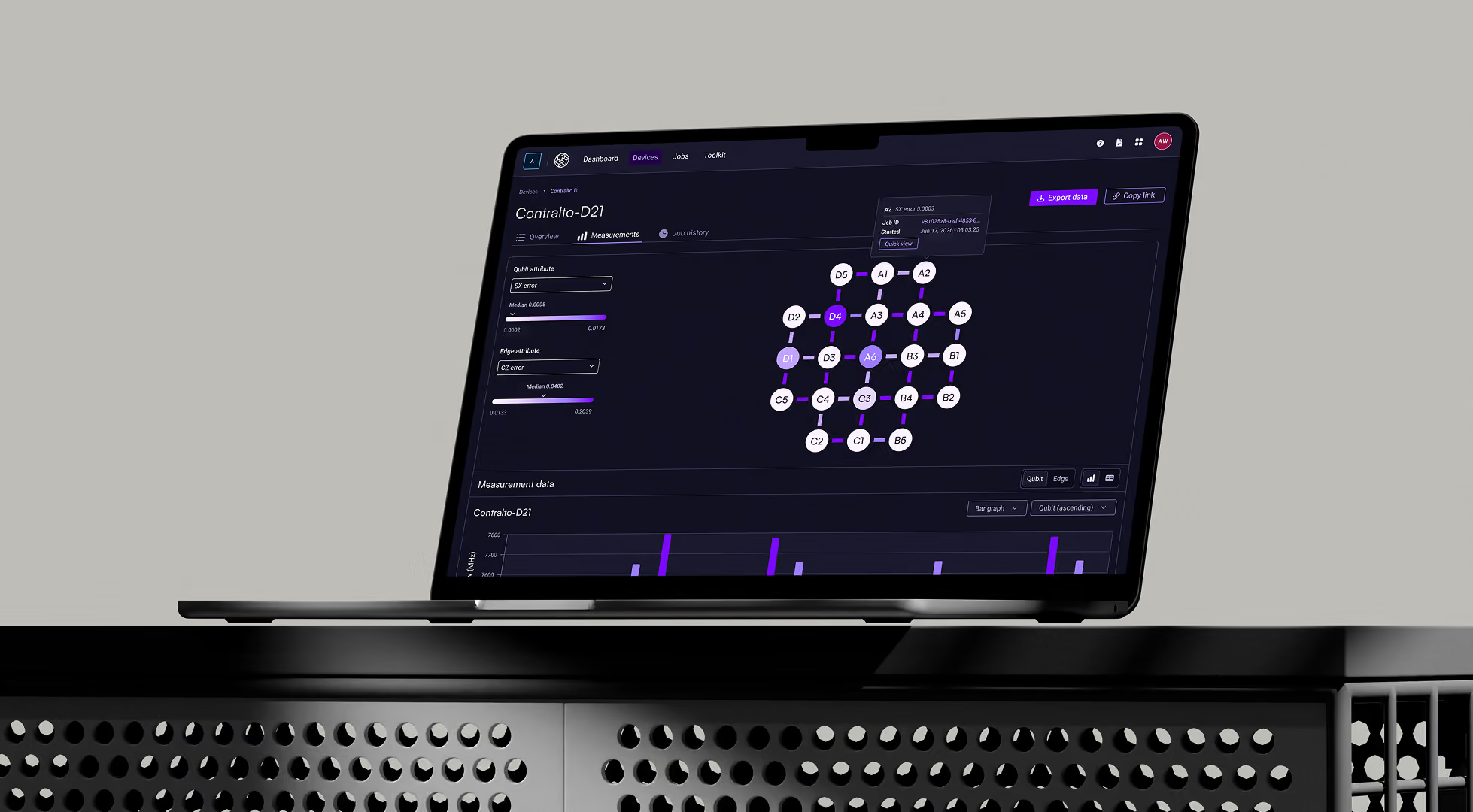
The case studies, supported by executions on IBM quantum computing hardware, outline four high-impact applications for defense, providing first-movers with an asymmetric battlefield advantage through the adoption of quantum computing. Each application provides estimated timelines for quantum advantage, projected to arrive between 2027 and 2029 in alignment with IBM’s published quantum roadmap:
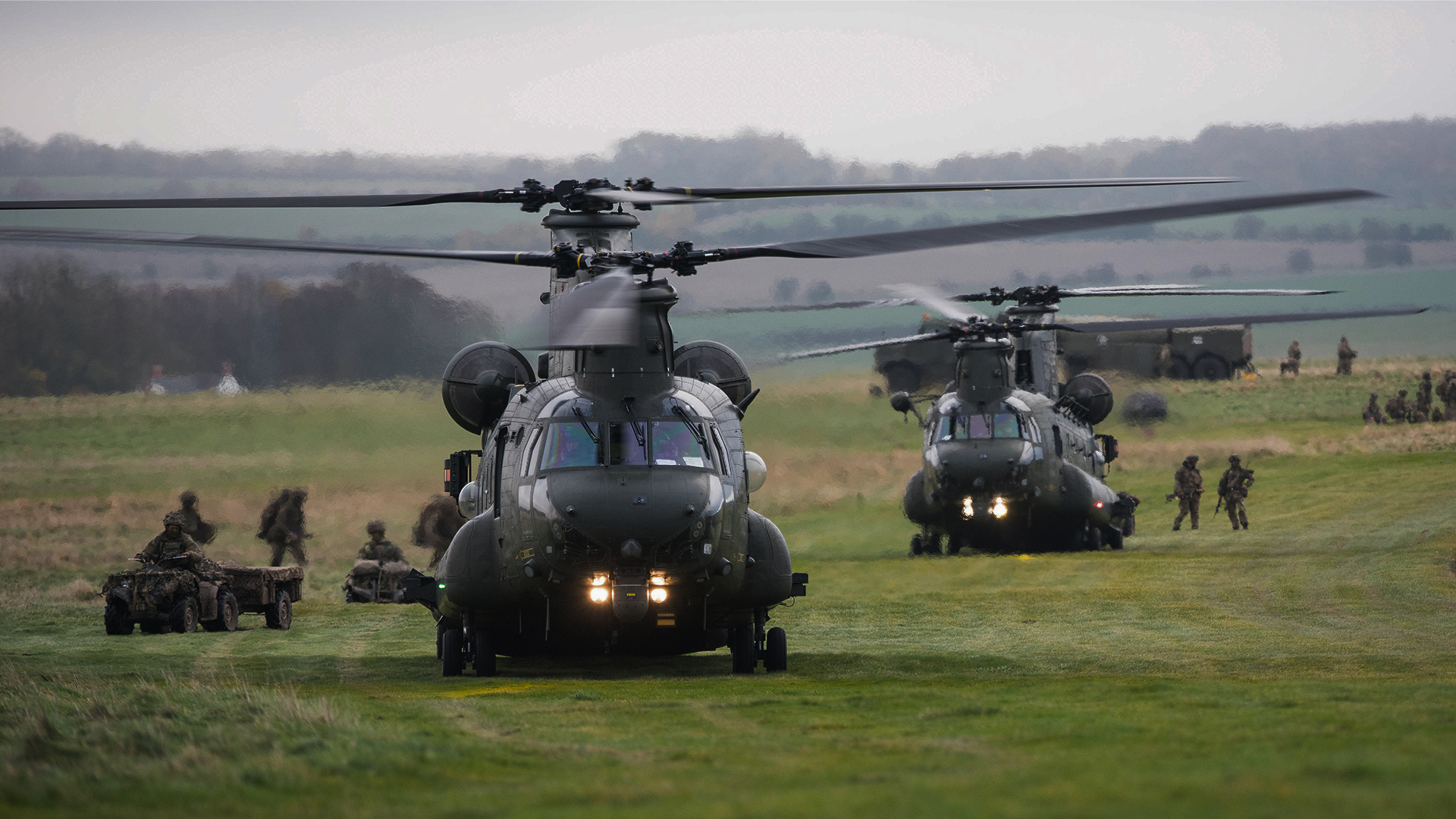
- Convoy routing: Validates the applicability of quantum computing to real-world military logistics in circumstances where resupply routes may be compromised by enemy action. Q-CTRL successfully solved a full deployment scenario of 5,000 vehicles for the Australian Army during the joint military exercise Talisman Sabre. The results, covering 50 convoys using 85 qubits, minimized total deployment time by integrating factors such as route availability and time-varying congestion on supporting roads.
- Strategic airlift: Demonstrates the operational relevance of quantum computing to the optimization of strategic airlift, reducing aircraft and travel costs. Similar to rail scheduling solutions the company developed for Network Rail and the UK Department for Transport, this methodology assigns optimal storage locations for transport items to accelerate high-priority cargo delivery while satisfying safety and weight constraints.
- Defense production resilience: Showcases the application of quantum computing to resilient manufacturing to ensure a steady materiel supply in critical circumstances. This work, adapted from the Airbus BMW Group Quantum Mobility Quest, uses 98 qubits to optimize the production of a complete aircraft while managing complex constraints like dual sourcing and transportation feasibility.
- Missile defense and counter-UAS: Responsive to current exigencies in the Middle East, this work shows how quantum optimization can deliver a decisive capability in counter-UAS and missile defense, maximizing the protection of critical assets and enabling the earliest threat interception.
Quantum technology is set to provide the decisive edge to secure battlefield advantage for the United States and its allies. Strategic investments through the Department of War’s critical technology initiatives and the National Quantum Initiative position the United States as a global leader, set to secure true battlefield information dominance for years to come. Q-CTRL works to empower mission planners to solve the critical logistical, planning, and operational problems that win wars. We’re committed to delivering the strategic advantage required for high-stakes missions, bringing the most advanced capabilities in quantum computing to the AUKUS partnership. Dr. Michael Hush, Chief Scientist at Q-CTRL
This outlook follows Q-CTRL’s recent demonstration of practical quantum advantage using an IBM quantum computer, where its performance-management software enabled a 3,000 times speedup in materials discovery. This same capability to augment state-of-the-art quantum computers with software is what enables the quantum solutions for complex military challenges outlined in this new defense outlook.
Download the white paper, Quantum Computing for Battlefield Information Dominance, to explore the case studies.
About Q-CTRL
Q-CTRL is the pioneer in AI-powered infrastructure software for quantum technology, offering a hardware-agnostic software platform that makes quantum machines thousands of times more powerful. This opens many parallel market verticals in computing, sensing, and health, making Q-CTRL a truly ubiquitous quantum company based on a single unique technology. It is the first company to achieve quantum advantage in both quantum computing and quantum sensing for navigation.
The company’s marquee product is an unjammable, unspoofable, undetectable quantum navigation system that works when GPS is unavailable, is 100 times better than the best alternative, and is being deployed on commercial aircraft with Airbus, in defense with Lockheed Martin, and on drones.
The company’s breakthroughs have been featured in The New York Times, The Wall Street Journal, TIME, Forbes, and Newsweek. Founded in 2017 by Professor Michael J. Biercuk, Q-CTRL operates globally from offices in Sydney, Los Angeles, San Francisco, Huntsville, Berlin, and Oxford.