Q-CTRL Delivers 3,000x Speedup in Materials Discovery for the Energy Sector with Quantum Computing, Demonstrates Evidence of Practical Quantum Advantage
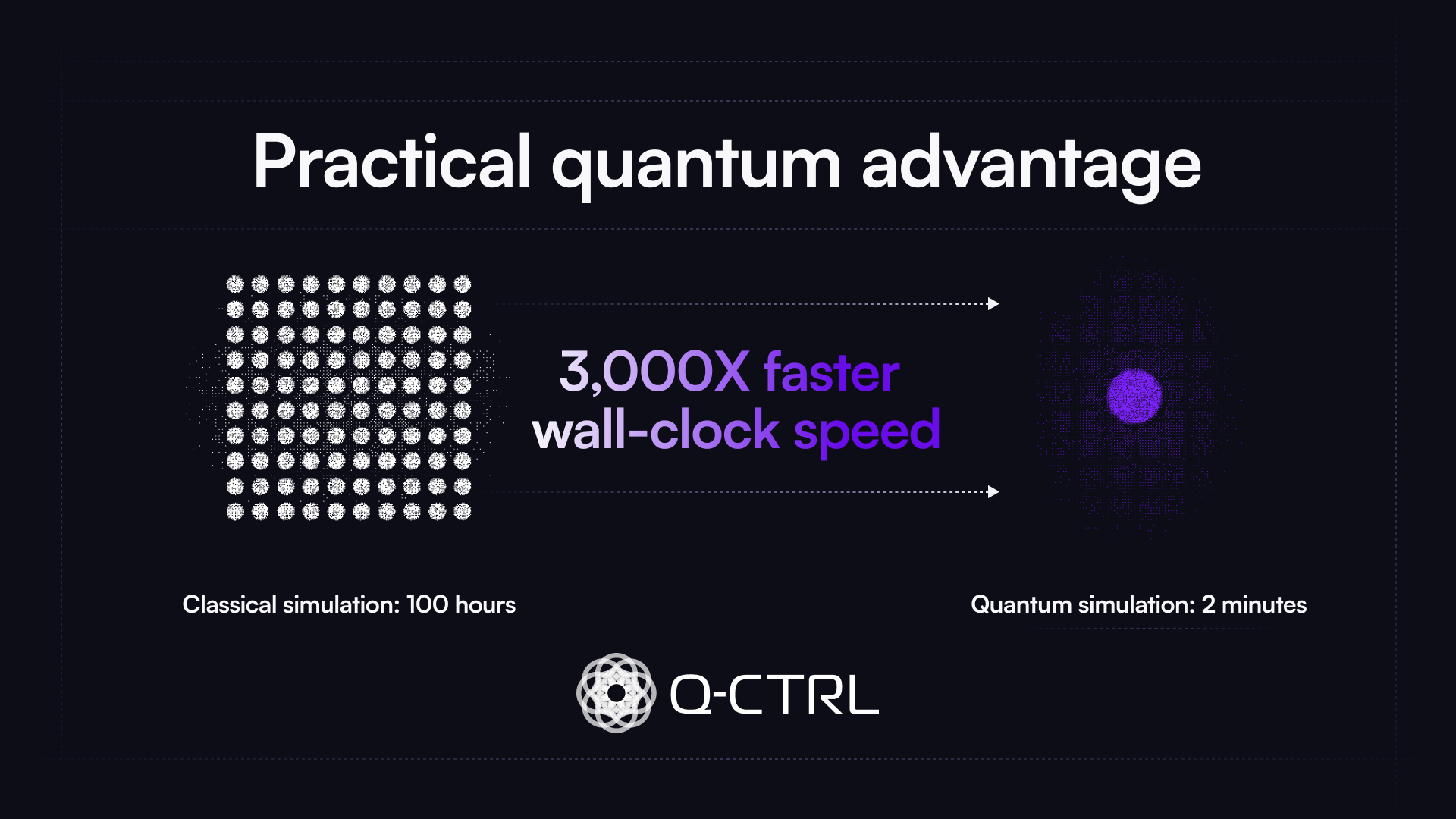

LOS ANGELES, CA – May 6, 2026 – Q-CTRL, the global leader in quantum infrastructure software, today announced it has achieved a 3,000 times speedup on a problem of commercial relevance using the IBM Quantum Platform. Q-CTRL has achieved evidence of practical quantum advantage over performance-optimized industry-standard classical software on a known, practically useful problem in materials science, marking the first achievement of practical quantum advantage.
At a scale beyond the reach of exact calculation, Q-CTRL used the native integration of its performance-management software on the IBM Quantum Platform to successfully run a quantum algorithm and return results with accuracy meeting industry-standard expectations. The quantum algorithm took just two minutes to run, while the same problem took over 100 hours using the best classical tools to execute on classical hardware.
With approximately one-third of global supercomputer time currently dedicated to chemistry and materials simulation, delivering new computational capabilities can be transformative for applications critical to the future of energy. However, these applications remain constrained by massive computational bottlenecks.
Quantum computers often follow the same quantum physics as the problems being simulated, making these prime candidates for quantum acceleration.
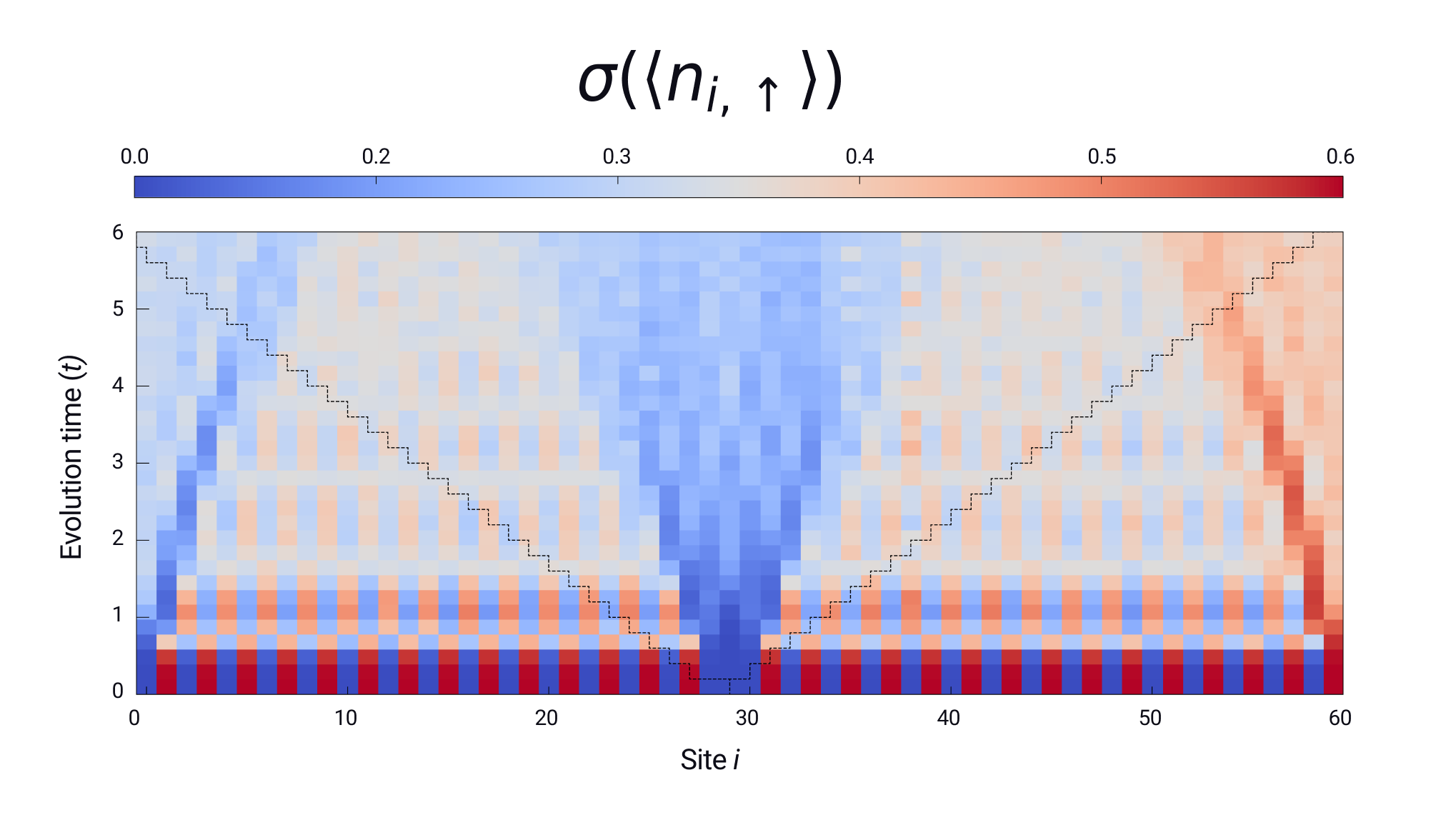
The Q-CTRL team compared its quantum calculations, focused on how electrons in materials give rise to the properties we use for energy transmission, storage, and generation, to the best implementation of a state-of-the-art, industry-standard software package from the materials-science community.
The two approaches agreed, up to a point. To improve the agreement, the team had to increase the resolution of the classical simulation, at the cost of a major blowout in execution time: the classical simulation increased to over 3,000 times longer than the time required by the IBM quantum computer.
Scientists and engineers dedicate thousands of hours to performing materials simulations in their efforts to unlock the future of energy, from photovoltaics to fusion. These results mark the beginning of an era of positive ROI from today’s widely available quantum computers on problems that early adopters truly care about. That’s the nature of Practical Quantum Advantage. Michael J. Biercuk, CEO and Founder of Q-CTRL
Despite their promise, quantum computers can be limited by noise and errors, which can degrade performance and prevent users from achieving useful results on relevant problems. Q-CTRL’s performance-management infrastructure software addresses this problem and expands the capabilities of today’s most advanced machines.
Q-CTRL’s demonstrations showcase the crucial role of software in unlocking near-term quantum capabilities. A standout aspect of Q-CTRL's recent effort is their emphasis on runtime error suppression, highlighting speed as a critical advantage for quantum computers, and proving that quantum hardware can currently outpace state-of-the-art classical architectures in total wall-clock time for certain applications of high strategic value. Andre Konig, CEO of Global Quantum Intelligence
The specific infrastructure software configuration used for these demonstrations will soon be publicly accessible on the IBM Quantum Platform as a new Qiskit Function, so anyone can build off of these results and incorporate quantum computing directly into their chemistry and materials R&D.
We've moved past the question of whether quantum computers have utility and onto the question of how to use them well. IBM has built the largest quantum computing ecosystem in the world, and we're putting increasingly capable systems in the hands of the people doing the work. Results from partners like Q-CTRL are showing how these systems contribute to scientific workflows. Jay Gambetta, Director of IBM Research and IBM Fellow
Developing room-temperature superconductors and carbon-neutral materials represents some of the most significant computational challenges today. Q-CTRL and IBM have now demonstrated that a quantum processor, reinforced by advanced error suppression, can surpass leading tensor-network heuristics on a non-trivial Fermi–Hubbard model. This achievement represents a major signal to industry that quantum simulation is both ready and an essential component of the R&D roadmap for future materials discovery. Jean-Francois Bobier, Partner and Vice President at the Boston Consulting Group
This outcome follows just one year after Q-CTRL demonstrated commercial quantum advantage in navigation, producing a GPS-free quantum navigation system that outperformed the best like-for-like classical alternative by 100 times. These milestones highlight how Q-CTRL’s focus on quantum control infrastructure software as a quantum-hardware enabler has proven key to advancing the entire quantum industry.
To learn more about the demonstration, read the technical manuscript.
The infrastructure-software configuration used to enable these demonstrations will soon be available for Fire Opal users, empowering you to directly confirm and build off of these results as you adopt quantum computing in your materials and chemistry R&D. Join the waitlist to be among the first to access the upcoming Simulation Solver.
Editor’s note
Practical quantum advantage refers to the point where quantum computers outperform the best available conventional alternative in a real-world application of known commercial or scientific relevance.
In summary, the Q-CTRL team demonstrated that an IBM quantum computer augmented by its infrastructure software running on the IBM Quantum Platform can:
- Execute a problem of known value at a scale that is meaningful and challenging
- Reach a solution over 3,000 times faster in wall-clock time than the state-of-the-art industry-standard alternative run on accessible hardware.
- Complete the task in a practically relevant amount of time and simultaneously deliver solution accuracy that meets or exceeds existing tooling and user expectations.
The computational problem studied is Fermionic Simulation, which is both of known value to industry practitioners in materials science and physics, and understood to scale poorly for classical computers, making it a prime candidate for long-term sustainable advantage as the capabilities of quantum computers mature. Formally, this problem resides in a known complexity class called BQP, which quantum computers can efficiently solve.
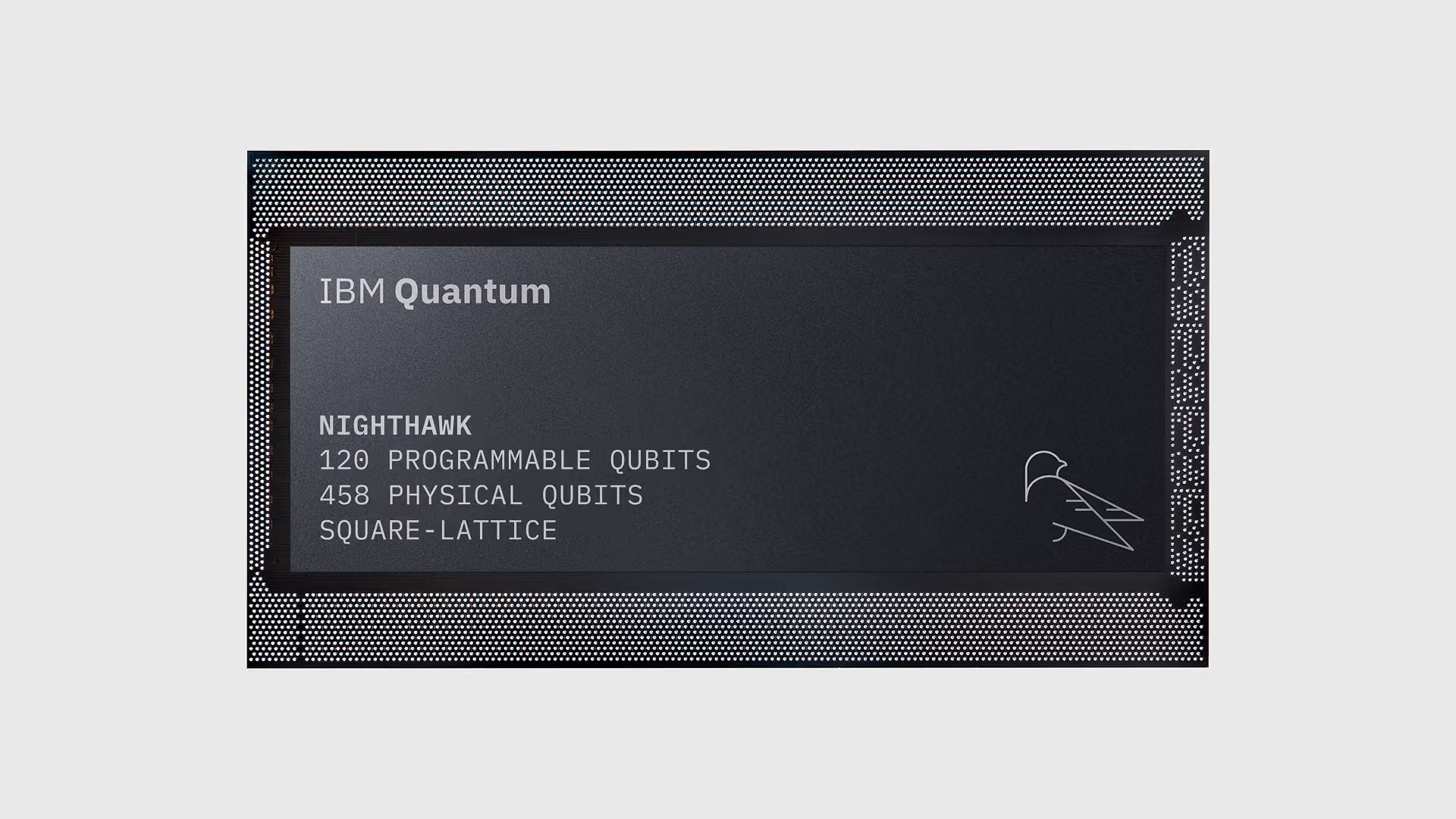
The quantum algorithm in use required 120 qubits and over 10,000 two-qubit quantum-logic operations, and was enhanced by Q-CTRL’s performance-management software, making this demonstration only achievable for end users today on public quantum computers from IBM.
In its benchmarking, the Q-CTRL research team compared quantum-computer outputs against multiple classical computational tools. The key software package used for classical simulation is an efficient Tensor Network calculational package called Time-Dependent Variational Principle (TDVP), from the Flatiron Institute. This tool has enabled over 1,250 technical publications in the field of quantum materials since its release in 2015.
Q-CTRL acknowledges the potential for future specialized classical algorithms to be built that outperform this tool, and the possibility that major improvements to GPU acceleration for TDVP could speed the classical calculation; such solutions have remained unavailable to date despite significant research and industry demand.
Accordingly, Q-CTRL claims practical quantum advantage relative to what is possible today, rather than as compared against an unknown theoretical possibility.
About Q-CTRL
Q-CTRL is the pioneer in AI-powered infrastructure software for quantum technology, offering a hardware-agnostic software platform that makes quantum machines thousands of times more powerful. This opens many parallel market verticals in computing, sensing, and health, making Q-CTRL a truly diversified quantum opportunity based on a single unique technology.
The company’s marquee product is an unjammable, unspoofable, undetectable quantum navigation system that works when GPS is unavailable, is 100 times better than the best alternative, and is being deployed on commercial aircraft with Airbus, in defense with Lockheed Martin, and on unmanned drones.
The company’s breakthroughs have been featured in The New York Times, The Wall Street Journal, Forbes, and Newsweek. Founded in 2017 by Professor Michael J. Biercuk, Q-CTRL operates globally from offices in Sydney, Los Angeles, San Francisco, Huntsville, Berlin, and Oxford.