_(cropped)%201.webp)


HEAR from the team
Event schedule
Our team of quantum control experts will present talks across a range of new methods and techniques that have enabled us to achieve record-breaking results in quantum computing.
Unlocking high performance in quantum computing using error-suppression

16th March, Mon, 10:24 - 10:36

Convention Center, Mile High Ballroom 1C

Paul Coote
Noise and decoherence are major obstacles to quantum computing performance. In this talk we highlight recent progress in error-suppression methodology from our group, with particular attention to the combined effect of a unified and automated error-suppression pipeline. We describe characterization and circuit-level correction of coherent gate errors, as well as circuit-aware and error-aware embedding of dynamical decoupling to fully eliminate crosstalk errors. Each of these methods is independently applied; however, we demonstrate that together they unlock significantly higher performance compared to direct hardware execution.
Digital quantum simulation of anamolous transport in the tilted Fermi-Hubbard model: Part I
17th March, Tues, 13:24 - 13:36
Convention Center, Mile High Ballroom 4E
Sona Najafi
The thermalization dynamics of isolated quantum many-body systems lie at the core of quantum information science, revealing rich behavior between integrability and ergodicity. The tilted Fermi–Hubbard model—combining strong interactions, kinetic constraints, and tilt-induced localization—offers a clean, disorder-free platform to study non-ergodic phenomena. In this work, we use digital quantum processors to probe how a tilted potential shapes transport in one- and two-dimensional Fermi–Hubbard systems, reaching scales beyond 120 qubits. The first part of the talk will highlight the experimental findings and their implications for near-term quantum-advantage demonstrations.
Digital quantum simulation of anomalous transport in the tilted Fermi-Hubbard model: Part II
17th March, Tues, 13:36 - 13:48
Convention Center, Mile High Ballroom 4E
Aleksei Khindanov
In the second part of the talk, we discuss problem-tailored compilation strategies, which allow us to scale system size of the experiment to 120 qubits for the full-spin Fermi-Hubbard model, and reach circuit depths of 20 trotter steps.
Matrix models on ion traps - A quantum benchmarking study
18th March, Wed, 10:12 - 10:24
Convention Center, Mile High Ballroom 4E
Gavin Hartnett
Matrix models are an important class of theories in high-energy and mathematical physics. They provide simplified but powerful frameworks for studying nonperturbative aspects of string theory, gauge/gravity duality, and the dynamics of strongly interacting quantum systems. In this talk, we present the first experimental results of simulating matrix models on quantum computers. Through device-specific noisy simulations combined with error mitigation strategies, we establish concrete resource requirements and identify performance boundaries for current quantum hardware. This work provides essential benchmarking data for near-term quantum devices and lays the foundation for simulating more complex matrix models relevant to string theory and gauge/gravity duality, with future extensions targeting the BFSS and BMN models as quantum hardware capabilities advance.
The Quantum Utility Block (QUB) - A modular architecture and quantum virtualization to accelerate quantum adoption
18th March, Wed, 15:10 - 15:30
Qblox booth #810
James Guilmart
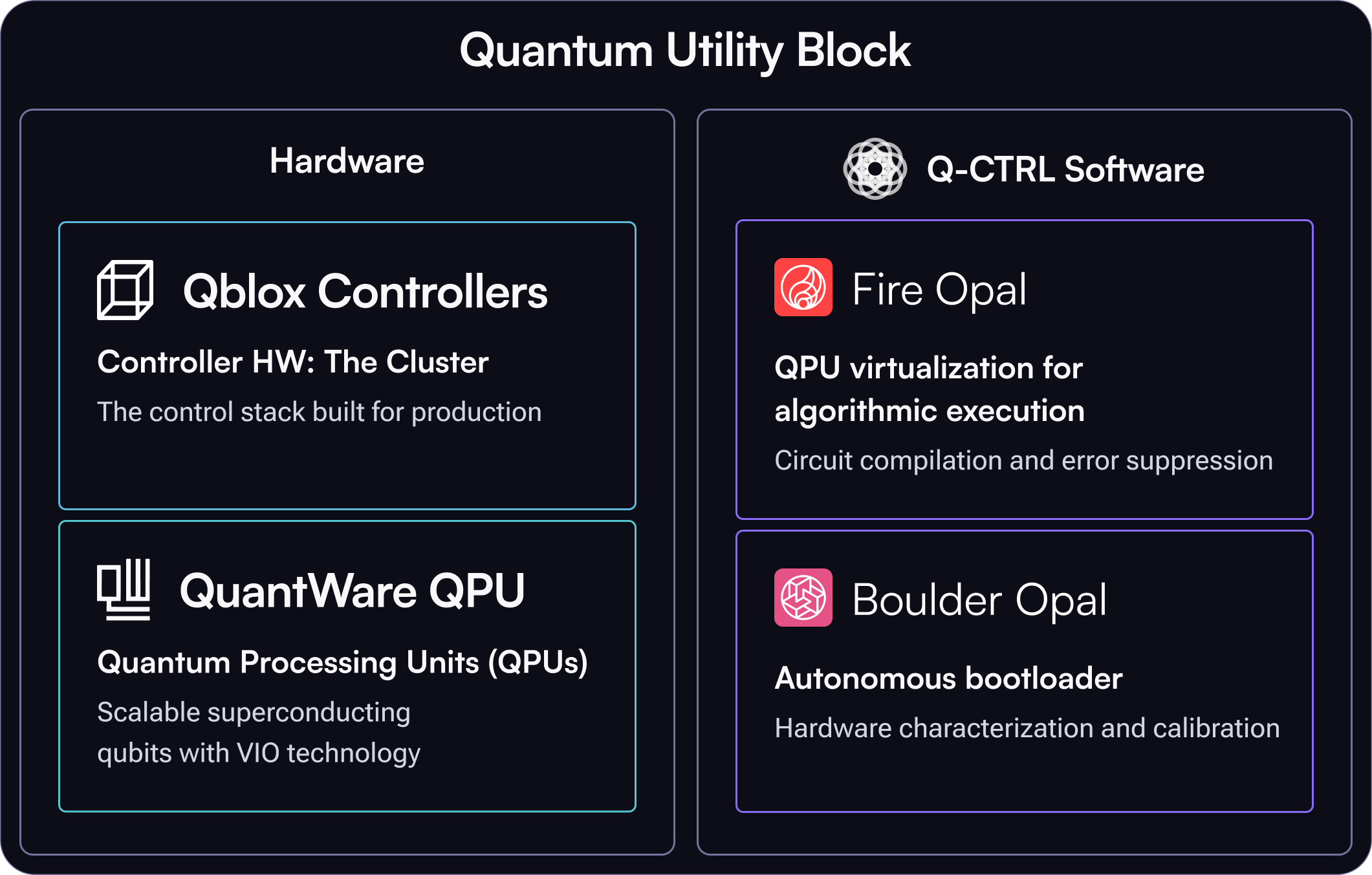
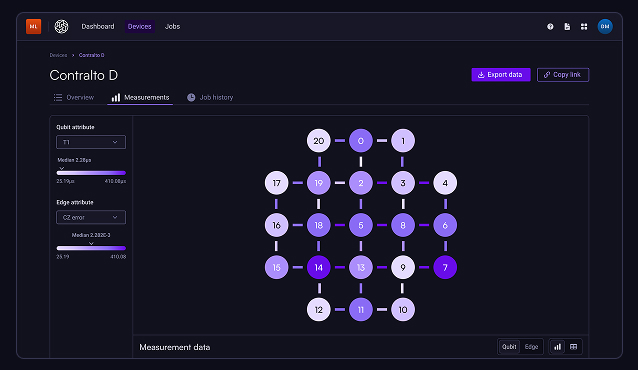
The Quantum Platform for Advancing Commercialization (Q-PAC) is a new system deployed at the Elevate Quantum facility in Arvada, Colorado. This is the first deployment of a Quantum Utility Block (QUB), a reference design consisting of QuantWare QPUs, Qblox controllers, and Q-CTRL software, and can be accessed by interested organizations looking to test out a modularized quantum design. The demonstrated data visualization tool from Boulder Opal shows the performance of the system, as well as the ease-of-use to tune up a QUB system, validate it's performance, and monitor system parameters and gate fidelities over time.
Autonomous calibration of superconducting hardware: challenges and opportunities
18th March, Wed, 15:42 - 15:54
Convention Center, Mile High Ballroom 2A/3A
Giacomo Torlai
Robust and reliable software tools for autonomous calibration are essential for advancing quantum computing hardware. Automated cold-start tune-up routines requiring minimal human intervention enable rapid device screening, shortening the verification cycle and accelerating hardware development speed. Simultaneously, maintaining peak device performance requires precise tuning of high-fidelity operations and real-time re-calibration to ensure stability. In this talk, we will present our approach to autonomous tune-up of superconducting qubit hardware, from cold-start bring-up to the system-wide optimization of readout and gate operations. We will share our progress toward a scalable calibration framework, highlight the challenges and opportunities we’ve encountered, and outline our vision for scaling toward the quantum utility regime.
What's on at the booth
Accelerating quantum innovation
Come meet our experts, discuss your applications and see live demos of our quantum solutions.
The quantum blue-print for HPC data centers
The Quantum Utility Block (QUB) is a proven, pre-validated quantum reference architecture for on-premises quantum computing jointly engineered by QuantWare, Qblox, and Q-CTRL. Built on interoperable hardware controlled by intelligent autonomous software and with planned NVQLink connectivity to local GPU clusters, QUB delivers a modular, circuit-ready quantum computer that eliminates traditional procurement, installation, and operational barriers.
Watch this space for the official opening announcement of our first QUB deployment at the Elevate Quantum Commercialization lab.
Accelerate system bring-up with autonomous calibration
Utilize our robust framework for autonomous QPU testing and calibration to secure predictable performance and availability. Boulder Opal Scale Up implements intelligent autonomy to accelerate system bring-up and ensure consistent uptime. Use repeatable, automated workflows to abstract low-level complexity and maximize system utilization. To maintain high-performance hardware and scale your quantum infrastructure with absolute technical confidence.

Accelerate your quantum algorithm
Fire Opal is an out-of-the-box cloud solution that allows you to solve your toughest quantum problems with over 100 qubits. It offers a single pipeline for abstracting hardware, automatically reducing error, and boosting algorithmic success on quantum computers for peak performance. Scale your research with Fire Opal through quantum hardware access providers, including IBM Quantum (via Qiskit Functions) and Amazon Braket. Join the waitlist to access our upcoming Fire Opal Optimization Solver integrated with the IonQ trapped ion processor.


Careers
We are hiring!
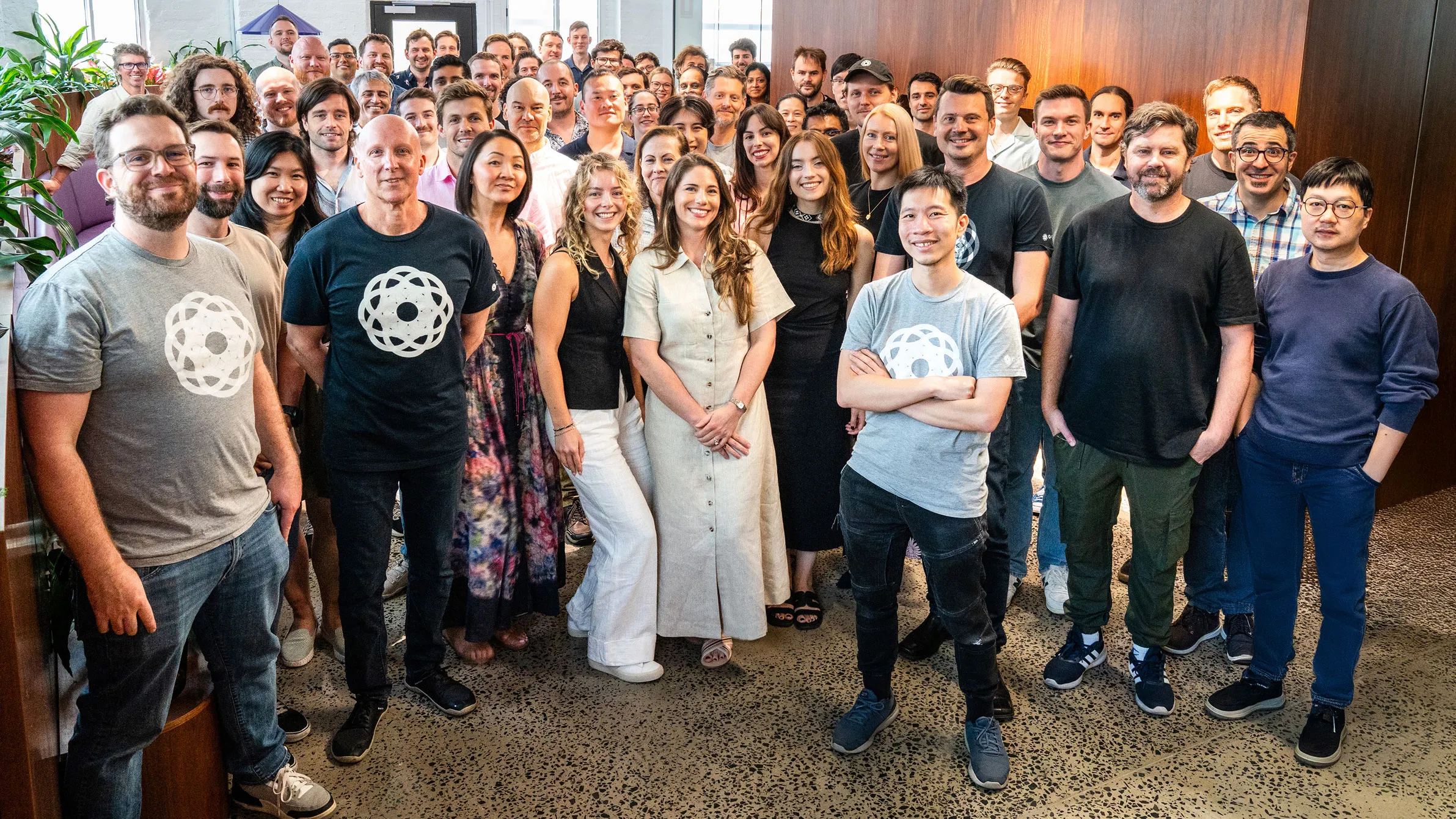
We bring together diverse teams united by curiosity and ambition, working collaboratively to push the boundaries of what quantum technology can achieve.
Join us to solves the hardest challenges in quantum computing and quantum sensing, delivering real-world impact for defense and industry.
talk to us
Request a meeting at APS
Ready to accelerate your quantum deployment? Stop by booth #2000 or book a session with our team to explore how we can help in your quantum journey.
talk to us
Request a meeting at APS
Ready to accelerate your quantum deployment? Stop by booth #2000 or book a session with our team to explore how we can help in your quantum journey.